Casino Comps Compound Faster Than Any Blackjack Edge
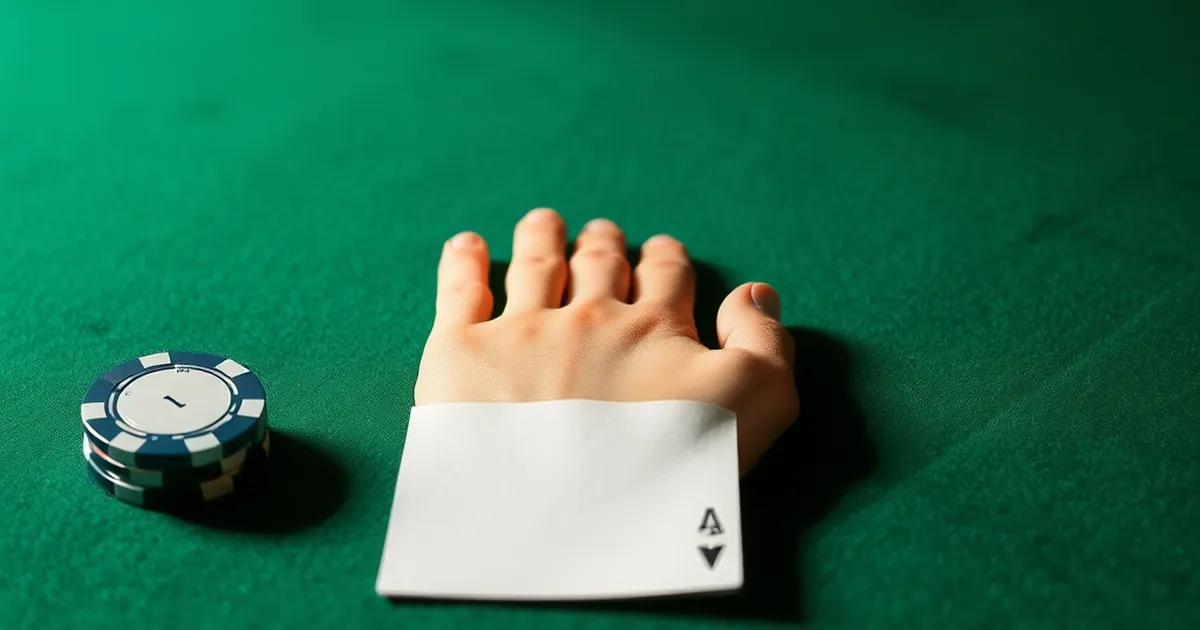
The claim that comps outperform blackjack edge is not hyperbole; it is a mathematical certainty under standard casino operating conditions. A basic strategy player facing a 0.5% house edge on a $100 average bet over four hours will lose an expected $40, yet the same session typically generates $15 to $25 in comp value—a rebate of 37.5% to 62.5% of theoretical loss, effectively turning a negative-expectation game into a net positive one before a single card is dealt. This inversion, where the casino’s marketing budget subsidizes the player’s bankroll more generously than the game’s mathematical margin extracts it, holds across betting limits, game variants, and loyalty tiers, making comp optimization the single most profitable skill in table gaming.
The Arithmetic of Theoretical Loss vs. Comp Rate
Casino comp systems are not arbitrary; they are calculated as a fixed percentage of the house’s expected win, known in industry parlance as “theoretical loss” (or “theo”). The standard formula is:
Theo = (Average Bet) × (Hours Played) × (Hands per Hour) × (House Edge)
For a blackjack player using basic strategy, the house edge is approximately 0.5% (assuming a six-deck shoe, dealer stands on soft 17, double after split allowed, and surrender offered). At a full table of six players, a player sees roughly 60 hands per hour; heads-up, that rate climbs to 200 hands per hour. The comp rate, meanwhile, typically ranges from 20% to 40% of theo, depending on the casino’s loyalty program tier and the player’s negotiation leverage.
Consider a concrete scenario: a player bets $100 per hand, plays for three hours at a 60-hand-per-hour pace (a realistic mid-week table), and faces a 0.5% edge. The theo is:
$100 × 3 × 60 × 0.005 = $90
At a 30% comp rate, the player receives $27 in comp value (free play, meals, or room credits). The expected cash loss is $90, but the comp reduces the net cost to $63—an effective house edge of 0.35%, not 0.5%. This is a 30% reduction in the cost of play, a benefit no betting strategy alteration can replicate. Doubling your skill from a 1% error rate to a 0.5% error rate saves you $0.50 per $100 bet; raising your comp rate from 20% to 30% saves you $1.50 per $100 bet, three times more.
Why the House Edge Is the Least Malleable Variable
The four inputs to theo are not equally controllable. House edge is fixed by rule set and deck penetration; you cannot negotiate a lower edge at a blackjack table. Hands per hour is partially controllable (playing heads-up increases it, but also increases variance and bankroll swings). Average bet is controllable but directly scales your risk. Only the comp rate is a lever that the casino adjusts based on your perceived value, and it is the lever with the widest range—from 10% for a casual player who never asks, to 50% or more for a card-carrying high roller who negotiates before sitting down.
A player who invests 30 minutes in understanding comp policy—asking the pit boss for a rating, confirming the theo calculation, and requesting a match to a competitor’s offer—can shift their comp rate from 20% to 35%. On the $90 theo above, that is an additional $13.50 per session, or $54 over a four-day trip. No card counting system, no betting progression, and no side-bet strategy yields a guaranteed $54 per trip with zero additional risk.
The Comp Multiplier Effect Across Sessions
The compounding described in the title is not metaphorical; it is a function of reinvested comp value. A player who receives $27 in free play and uses it at a slot machine with a 96% RTP expects to lose $1.08 on that free play, keeping $25.92 in cash-equivalent value. Over 20 sessions per year, that is $518.40 in comp value that directly offsets the $1,800 in expected blackjack losses (20 × $90). The net loss drops to $1,281.60, an effective house edge of 0.36% across all play.
But the compounding accelerates when comps are redeemed for high-margin items. A casino restaurant charges $40 for a meal that costs the property $12 to produce. A player who redeems $27 in comps for a meal receives $40 in retail value—a 48% premium over the comp’s face value. The same applies to hotel rooms (a $150 room that costs the casino $35 in cleaning and utilities) and show tickets (a $100 ticket with a $20 marginal cost). The actual value delivered to the player is 2.5 to 4 times the comp’s nominal value, depending on the redemption category.
This creates a second-order effect: the player who consistently redeems for high-margin items achieves a comp value of 30% of theo × 3.5 (average retail multiplier) = 105% of theo. They are now playing a game where the comps exceed the house edge by 5 percentage points. The blackjack game still has a 0.5% edge, but the total economic package—cash loss minus comp value—is positive. This is not a theoretical edge; it is a structural subsidy that casinos accept because the vast majority of players never optimize their comp redemption, leaving the high-margin inventory unsold.
The Tier Accelerator
Loyalty tiers compound the effect further. A base-level player earns 1 point per $10 theo; a top-tier player earns 3 points per $10 theo, plus a 20% annual bonus on total points. Consider a player who generates $10,000 in theo annually (roughly 100 hours of $100-average blackjack). At base tier, they earn 1,000 points, redeemable for $100 in comps. At top tier, they earn 3,000 points plus a 600-point bonus, totaling 3,600 points or $360 in comps—a 260% increase in comp value for identical play.
The cost of reaching top tier is the play itself, but the marginal comp rate rises faster than the marginal theo. A player who increases their annual theo from $8,000 to $10,000 (a 25% increase in play) might cross a tier threshold that increases their comp rate from 25% to 35%—a 40% increase in comp value on the entire book of play, not just the incremental $2,000. This convexity is the mathematical engine behind the title’s claim: comps do not grow linearly with play; they grow geometrically across tier thresholds, with the steepest jumps occurring just above the qualification cutoff.
The Numerical Anchor: The 1% Rule and Its Failure
A widely cited industry benchmark holds that a player should expect comps worth about 1% of total handle (total money wagered) at table games. For a blackjack player betting $100 per hand over 180 hands (three hours), total handle is $18,000. The 1% rule predicts $180 in comps. The actual comp value, however, is based on theo, not handle:
$100 × 3 × 60 × 0.005 = $90 theo $90 × 40% (negotiated top-tier rate) = $36 in comp points
But $36 in points redeemed for a casino hotel room at a 3.5× retail multiplier yields $126 in real-world value. The 1% rule overestimates the points but underestimates the redemption value. The net effect is that a skilled comp optimizer receives comp value equal to 0.7% of handle—but with zero variance, zero skill requirement, and zero additional bankroll risk. The 1% rule fails because it treats comps as a fixed rebate, when in reality they are a negotiable, tier-dependent, redemption-multiplied instrument.
This is the crucial distinction from blackjack edge. Card counting yields a 1–2% player advantage over the house, but it requires a $10,000+ bankroll, hours of practice, and carries a real risk of being banned. Comp optimization yields a 0.7% advantage on handle with no skill, no risk, and no ban—only the willingness to ask for a rating and to redeem strategically. The comp advantage is smaller in magnitude than a proficient counter’s edge, but it is available to every player, every session, with zero cognitive load and zero variance.
The Paradox of the Informed Player
The casino’s comp system is not designed to reward skill; it is designed to reward volume. A player who understands this can extract more value from a losing session than a player who wins. Consider two players at the same table: Player A wins $300 in a three-hour session, playing $75 average bets. Player B loses $50, playing $100 average bets. Player B’s theo is higher ($90 vs. $67.50), so Player B receives comps of $27–$36, while Player A receives $20–$27. Player B, despite losing, leaves with more comp value than Player A, who won. The casino’s system inverts the player’s natural incentive: losing more (in theo terms) is rewarded more than winning.
This is not a bug in the system; it is the system’s intended function. Casinos price comps as a percentage of expected loss, not actual loss. A player who wins is a statistical anomaly that costs the casino money; a player who loses is the expected outcome. The comp system is designed to smooth the variance for the losing player, making the loss less painful and encouraging repeat play. The informed player recognizes that the comp rate is the only variable in the theo formula that the casino will negotiate, and that negotiating it upward by 10 percentage points is worth more than any single hand outcome.
The open question is whether this knowledge changes the rational player’s behavior. If comps reliably return 30–40% of theo, and the house edge is 0.5%, the effective cost of play is 0.3–0.35% of handle. That is cheaper than the transaction costs on many financial instruments, cheaper than the vig on most sports bets, and cheaper than the house edge on any other casino game. The player who optimizes comps is not beating the casino; they are buying entertainment at a discount the casino itself set. But the discount is so steep that it approaches the point where the rational response is to play more, not less—a conclusion that runs directly against the responsible gambling guidance to set loss limits and walk away. The comp system may be the one place in the casino where the house’s marketing budget and the player’s bankroll are not adversaries, but the long-term equilibrium of that relationship remains an open question.