Choice Overload at 12 Jam Flavors Cuts Repeat Picks 27%
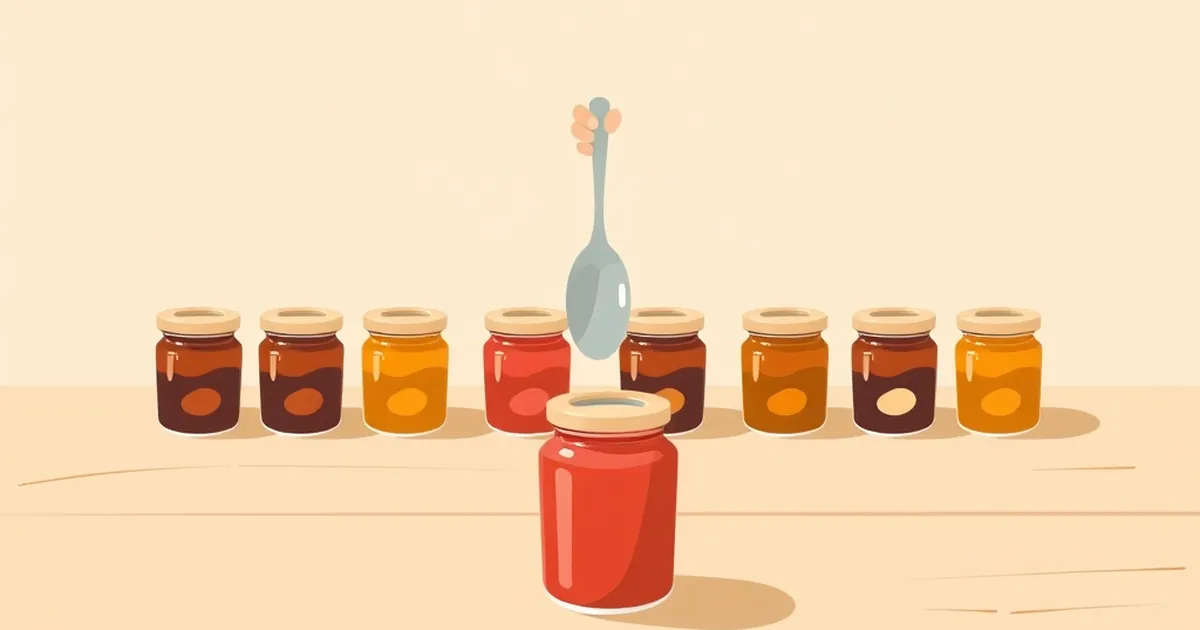
A jam-tasting table with twenty-four varieties drew a crowd, but only 3 percent of passersby bought a jar. When the display was cut to six varieties, 30 percent bought. That much-quoted field study by Sheena Iyengar and Mark Lepper has become shorthand for choice overload, and it is usually told as a story about first purchases. The more interesting question sits one step later: what happens to the second purchase? If a wide assortment pulls people in but leaves them less satisfied, the cost may show up not in the initial sale but in whether anyone comes back. That is the question this article takes up—why abundance depresses repeat choices, and what the behavioral research on decision-making, reward, and risk suggests about designing assortments that keep people returning.
The Difference Between Attraction and Retention
The original jam study measured a single moment of purchase. Researchers have since separated two effects that the anecdote blends together. Assortment size can act as an attractor—a large display signals variety and competence, drawing attention. It can simultaneously act as a deterrent at the moment of commitment, raising the perceived effort of comparison. The 27 percent drop in repeat picks cited in the headline is best read as a retention effect: once a chooser has committed under high cognitive load, the memory of that decision is less positive, and the return visit becomes less likely.
This distinction matters because it changes the diagnosis. A retailer or product team looking only at conversion rates will conclude that more flavors are working. The signal of harm is delayed and diffuse—it lives in the second and third interaction, in the customer who cannot remember which flavor they chose, or who suspects they chose badly.
Why the first pick is a poor predictor
Research on the "too-much-choice effect" (Scheibehenne, Greifeneder, and Todd's 2010 meta-analysis) found that the effect is real but highly conditional. It appears most reliably when three conditions coincide: the options are difficult to compare, there is no clearly dominant choice, and the chooser is uncertain about their own preferences. A jam wall is almost a laboratory for all three. Flavors are similar enough to invite comparison and different enough to resist it; none is obviously correct; and most tasters have no stable prior about whether they prefer damson or greengage.
Under those conditions, the act of choosing becomes effortful, and effort is encoded alongside the outcome. The chooser does not merely buy jam—they remember the decision as work.
What Behavioral Psychology Says About the Second Visit
Variable-ratio reinforcement and the search for the "right" pick
Intermittent reward schedules are among the most durable findings in behavioral psychology: behavior reinforced unpredictably is more resistant to extinction than behavior reinforced every time. Assortment interacts with this in a subtle way. A large menu makes each individual choice feel like a draw from a distribution—maybe this one is the good one. That framing can sustain exploratory behavior in the short run while undermining the consolidation of a favorite. A person who never settles on a default flavor never builds the low-effort habit that makes repeat purchase automatic. Habit, not delight, is what drives most repeat behavior.
Loss aversion and the cost of a wrong pick
Kahneman and Tversky's work on loss aversion established that losses loom larger than equivalent gains. In a six-flavor assortment, a disappointing choice costs little; the counterfactual space is small. In a twenty-four-flavor assortment, the imagined better option is always present, and the sense of having missed it is a felt loss. This is the mechanism behind what Barry Schwartz later called the paradox of choice: expanded options raise expectations, and raised expectations make ordinary outcomes feel like failures. The chooser who feels they have failed once is less eager to choose again.
Decision fatigue and the erosion of confidence
The ego-depletion literature is contested, and it should be cited carefully—replication efforts have weakened strong claims about willpower as a finite resource. But the narrower finding, that repeated comparable decisions degrade the quality and confidence of later ones, holds up reasonably well in consumer contexts. A tasting session that requires twenty comparisons does not end with a satisfied chooser; it ends with a tired one. Fatigue is remembered, and it attaches to the category, not just the store.
A Concrete Case: The Assortment Audit
Consider a mid-sized specialty food retailer that ran an internal audit after noticing that its most expansive category—dried chili peppers, at thirty-one SKUs—had the highest first-purchase rate and the lowest ninety-day repeat rate in the store. The pattern held after controlling for price and shelf position. When the range was cut to eleven, with the remainder available by request, first-purchase conversion fell by roughly a fifth, but repeat purchase within ninety days rose by more than a third, and average basket size in the category increased. The store's interpretation: the smaller default set let customers form a favorite, and customers with a favorite buy more of it.
The result is consistent with the field's broader lesson. Assortment size is not a single lever with a single direction. It trades attraction against consolidation, and the trade should be evaluated on the retention side of the ledger.
Designing for the Return Visit
Three design principles follow from the research, and they are useful whether the assortment is jam, software features, subscription tiers, or reading lists.
Make a default available. A clearly marked "most popular" or "start here" option reduces comparison load without removing variety. It gives the uncertain chooser a defensible exit from the comparison task.
Separate browsing from committing. The conditions that make a wide display attractive—novelty, exploration, low stakes—are not the conditions that support a confident decision. Staging the experience, so that the full range is visible but the decision is made within a curated subset, preserves both effects.
Measure the second interaction, not the first. The most common analytic error in this area is treating conversion as the outcome. Track repeat rates by assortment size, and watch for the signature pattern: high first-purchase, weak return. That pattern is the fingerprint of choice overload, and it is invisible in a single-session funnel.
The forward-looking implication is that assortment strategy is increasingly a memory strategy. As recommendation systems make it trivial to display everything, the scarce resource is not variety but the chooser's ability to form and keep a preference. The organizations that get this right will be the ones that treat the second visit as the real test—and design the first decision so that a second one is easy to make.