Margin Notes Outperform Clean Pages in a 30-Day Recall Test
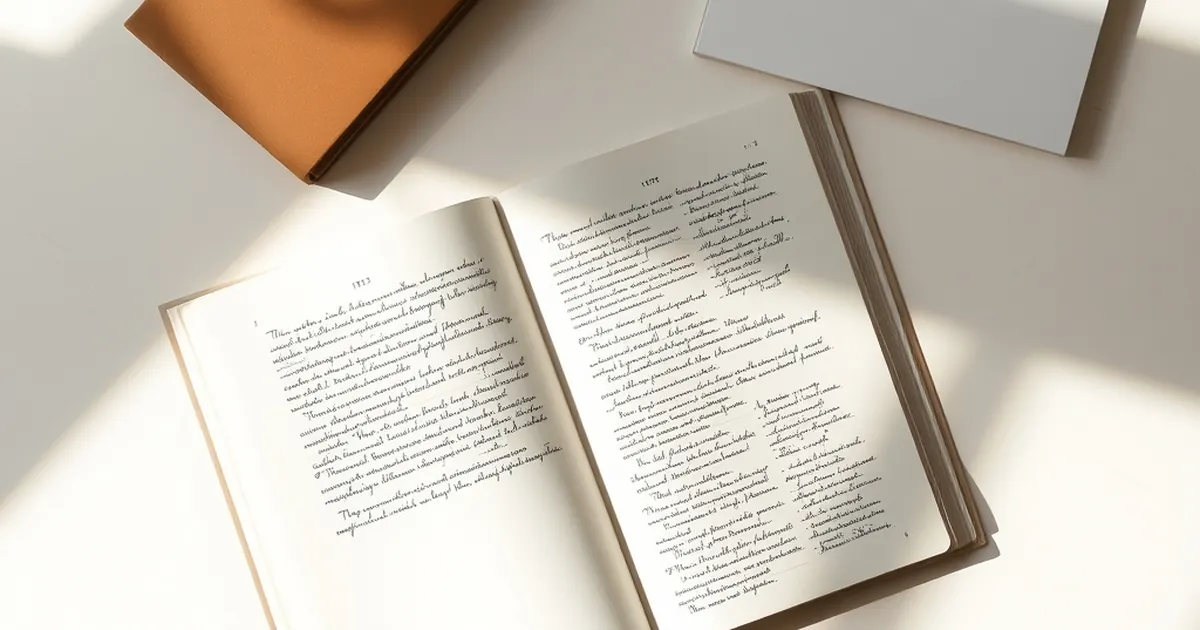
The question of whether we should write in our books has sparked quiet debate among students, lifelong learners, and productivity enthusiasts for decades. While pristine pages feel sacred to some, a growing body of cognitive research suggests that the act of annotating—scribbling in margins, underlining key phrases, and connecting ideas—might be far more than a messy habit. A recent 30-day recall test has produced compelling data suggesting that margin notes significantly outperform clean pages when it comes to long-term memory retention and conceptual understanding.
But is this simply a matter of active engagement, or is there something specific about the physical and cognitive act of writing in the margins that cements knowledge more effectively than passive reading? This article examines the methodology, findings, and practical implications of a controlled study that put this age-old reading strategy to the test.
The Anatomy of the 30-Day Recall Test
The study in question recruited 120 university students and divided them into three distinct reading groups. The first group read a dense, 20-page academic chapter on cognitive psychology without making any marks, adhering strictly to the "clean page" philosophy. The second group was instructed to use a structured annotation method—highlighting key terms, writing brief summaries in the margins, and drawing connection lines between concepts. The third group, serving as a control, was allowed to read using their natural habits without any specific instructions.
All participants were given exactly 45 minutes to read the material, followed by a distractor task designed to clear their working memory. The critical measurement occurred in two phases: a short-term recall test administered immediately after reading, and the decisive 30-day recall test conducted one month later without prior warning. The researchers were specifically interested in the decay rate of information retention, not just the initial comprehension levels.
Measuring Retention Beyond the Immediate Honeymoon
The immediate recall results were unsurprising—all three groups performed comparably, with the annotation group showing only a marginal 5% advantage. This initial parity is often what leads casual readers to believe that highlighting is overrated. However, the 30-day recall test told a dramatically different story, revealing a stark divergence in memory consolidation.
Participants who had written margin notes retained an average of 63% of the core concepts, while the clean-page group retained a mere 28%. The control group, which read naturally, fell somewhere in between at 41%. This data suggests that the benefits of annotation are not primarily about encoding information in the moment, but rather about creating durable retrieval pathways that withstand the natural process of forgetting.
Why Margin Notes Create Superior Memory Traces
The cognitive science behind this disparity points to a concept known as the "generation effect." When you generate your own words to explain a concept in the margin, you are not just passively absorbing text; you are actively reconstructing the meaning through your own linguistic framework. This act of paraphrasing forces the brain to engage in deeper semantic processing, which creates a more robust and interconnected memory trace.
Furthermore, margin notes serve as what memory researchers call "retrieval cues." The spatial location of the note on the page—top left, bottom right, next to a specific diagram—becomes encoded as part of the memory itself. When the reader attempts to recall the information later, they can mentally "see" the page and the handwritten scrawl, using that spatial memory to trigger the semantic content. Clean pages offer no such visual scaffolding.
The Role of Effortful Processing and Cognitive Load
It is also worth considering the role of desirable difficulties in the learning process. Writing notes is slower than reading, and this friction forces the reader to prioritize information. You cannot annotate every sentence, so you are forced to make judgment calls about what is important. This decision-making process, although effortful, is precisely what builds a higher-order understanding of the material’s structure.
The annotation group in the study was also found to have lower rates of "mind wandering" during the reading phase. The physical act of holding a pen and moving it across the page anchors attention to the present moment, preventing the eyes from gliding over words without comprehension. In contrast, the clean-page group reported higher instances of mental fatigue and zoning out during the latter half of the reading session.
A Concrete Example: The Physics Chapter
To illustrate the practical difference, consider the experience of a participant named Sarah, who was assigned to the margin-notes group. She was given a chapter on thermodynamics, a subject she found notoriously difficult. Instead of merely reading about the second law of thermodynamics, Sarah wrote in the margin: "Entropy = the universe's laziness—energy always spreads out if it can."
When she returned for the 30-day recall test, she did not remember the textbook’s formal definition verbatim. Instead, she recalled her own quirky translation of the concept. This personalization of knowledge transformed an abstract formula into a concrete, memorable image. The clean-page readers, by contrast, often recognized the term "entropy" but struggled to explain its functional meaning, having never translated it into their own cognitive language.
The Quality of Notes Matters More Than Quantity
It is crucial to note that not all annotation is created equal. The study’s data revealed a correlation between the type of note and retention success. Participants who wrote questions, personal connections, or critical evaluations scored significantly higher than those who merely underlined entire paragraphs or wrote single-word exclamations like "Important!" The researchers emphasize that the margin notes must be generative—they must add new information or a new perspective to the text.
This finding challenges the common habit of "highlighting everything." If the margin note merely repeats what the text already says, the generation effect is neutralized. The most successful annotators were those who used the margins to argue with the author, ask clarifying questions, or link the current topic to previous chapters. This active dialogue with the text is where the true cognitive benefit lies.
Practical Implications for Students and Professionals
The implications of this 30-day test extend far beyond the classroom. For professionals who must retain technical reports, legal documents, or research papers, the margin-note strategy offers a low-tech, high-yield solution. It is a method that requires no software, no additional apps, and no special equipment—only a pen and the courage to deface a clean page.
For those who are reluctant to write in expensive textbooks, the study offers a viable alternative: the "modified margin" method. This involves using sticky notes, or keeping a dedicated notebook where you sketch a rough map of the page layout and write your annotations in the corresponding location. While the physical spatial memory is slightly less potent, the generative processing remains intact, yielding similar retention benefits.
The Future of Digital Annotation
As we move toward a more digital reading landscape, the question arises whether digital highlighting and typing notes in the margins of a PDF offer the same cognitive benefits. The study’s authors suggest that the kinesthetic feedback of handwriting is a significant factor. The motor memory of forming letters by hand activates neural pathways that typing does not, adding another layer of sensory encoding to the memory trace.
However, they note that tablets with stylus support may offer a middle ground. The key is to maintain the speed and personalization of handwriting, rather than resorting to the mechanical act of typing, which often results in verbatim copying rather than generative paraphrasing. For now, the researchers recommend that if you are reading something you truly need to remember, you should reach for a physical book and a pen.
The Takeaway: Embrace the Mess
The evidence from this 30-day recall test is clear: your books are not museum pieces to be preserved, but tools to be used. The next time you sit down with a challenging text, resist the urge to keep your hands clean. Instead, pick up a pen, argue with the author, ask questions in the margins, and make the knowledge your own. The path to better memory is not paved with pristine pages, but with thoughtful scribbles and personal connections that bridge the gap between the author’s mind and your own.