Reading as a Practice of Mental Palimpsest
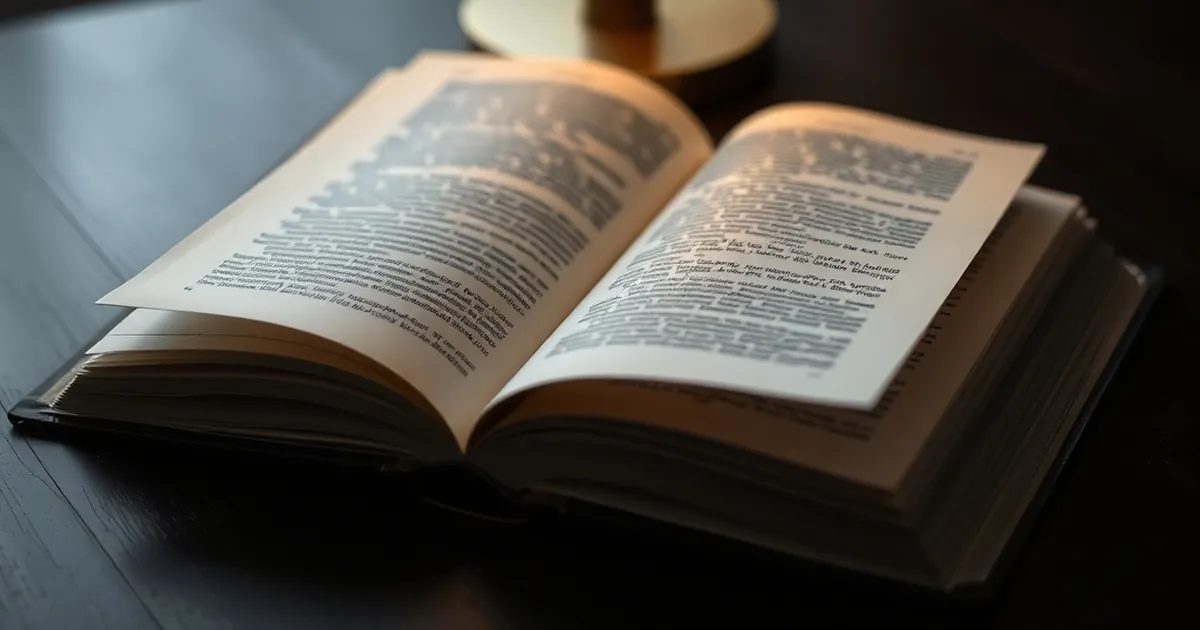
The central question of this essay is not what we read, but how the act of reading fundamentally alters the substrate upon which our thoughts are written. If the mind is a manuscript, then every book we encounter is not merely an addition to its pages, but a chemical agent that partially erases and overwrites the text that came before. This process, best understood through the metaphor of the palimpsest—a manuscript page whose original writing has been scraped away to make room for new text—suggests that reading is not an act of accumulation, but an act of continual, layered transformation.
The Palimpsest as a Cognitive Model
The term "palimpsest" originates from the practical realities of medieval scriptoria, where parchment was too scarce and expensive to discard. Scribes would wash or scrape away an older text to reuse the vellum, leaving behind faint, ghostly traces of the original words. A modern scholar can, under ultraviolet light, read the erased text beneath the visible one. This physical layering is a powerful metaphor for how the mind processes literature.
The Incomplete Erasure of Prior Knowledge
When we read a new book, we do not start with a blank slate. The "parchment" of our mind is already crowded with the ghostly imprints of every previous book, conversation, and experience. A new argument or narrative does not simply sit on top of this material; it actively scrapes away certain assumptions, sharpens others, and leaves the older text partially legible beneath the new inscription.
Consider the experience of a student who first reads Adam Smith's The Wealth of Nations and then, a semester later, reads Karl Marx's Capital. The Marx text does not simply add information; it chemically alters the reading of Smith. The student cannot unsee the labor theory of value, nor can they fully ignore Smith’s invisible hand. The result is a third, hybrid understanding that belongs to neither author—a palimpsest of economic thought where the original Smithian text is now visible only through the critical lens of Marx.
The Active Role of the Reader
This metaphor refutes the passive model of reading, where the reader is a mere vessel for the author's message. In the palimpsest model, the reader is the scribe, the scraper, and the re-inscriber. The act of reading is a destructive, creative violence—a necessary erasure that allows for new synthesis.
Every time we close a book, we are different. But we are not simply "more informed." We are re-formed. The old text of our worldview is now partially illegible, overwritten by the new text, yet still present as a faint, often contradictory, substrate. This is why re-reading a book years later is so jarring; the original text you remember is gone, replaced by the palimpsest of your current self.
The Mechanics of Layered Reading
How does this process function in practice? It is not a single event, but a series of cognitive operations that occur both during and after the act of reading.
The Moment of Cognitive Dissonance
The most powerful palimpsestic moments occur when a text directly contradicts a deeply held belief. This is the "scraping" moment. The brain must decide whether to reinforce the older inscription or to allow the new text to dominate. This is not a comfortable process. It requires the reader to hold two contradictory texts in mind simultaneously, allowing the friction between them to generate heat.
For example, reading Chinua Achebe’s Things Fall Apart immediately overwrites any simplistic, colonialist narrative of Africa one might have inherited from earlier texts like Joseph Conrad’s Heart of Darkness. The Achebe text does not erase Conrad entirely, but it forces a re-reading of Conrad’s dark river as a symbol not of a primitive continent, but of a European imagination. The older text remains, but now it is framed, annotated, and partially defaced by the newer one.
The Ghost of the Previous Page
A more subtle mechanism is the way a later chapter can retroactively rewrite the meaning of an earlier one. This is the essence of narrative palimpsest. A twist ending does not just add information; it forces the reader to mentally re-inscribe every previous page with new meaning.
Think of the final revelation in a mystery novel. The detective’s first interview with the suspect, which originally read as a simple conversation, is now scraped clean by the final revelation. The reader must mentally rewrite that scene, now seeing the suspect's nervous tics as evidence of guilt, not social awkwardness. The original, innocent reading is gone, overwritten by the final, guilty one. This is the core mechanism of how a book changes us: it forces us to rewrite our own past understanding.
The Ethical Imperative of the Palimpsest
If reading is an act of layering and erasure, it carries a significant ethical weight. We are responsible for what we allow to be scraped away and what we permit to be inscribed.
The Danger of the Final Draft
A mind that reads without the palimpsest model is a mind that seeks a single, final, unerasable text. This is fundamentalism, whether religious, political, or intellectual. It is the refusal to allow any new text to disturb the original inscription. Such a reader is not engaging in the practice of reading; they are merely performing a ritual of confirmation.
The healthy intellectual life is one that accepts the permanent state of being a palimpsest—a messy, layered document where no text is ever truly final. The goal is not to arrive at a clean page, but to cultivate a rich, complex, and even contradictory layering of texts that allows for nuance, empathy, and growth.
A Concrete Example: The Reader as Editor
I recall a colleague who, for decades, held Theodore Roosevelt’s The Winning of the West as a foundational text of American history. After reading Roxanne Dunbar-Ortiz’s An Indigenous Peoples' History of the United States, he described the experience as "watching the floor give way." The Roosevelt text, which he had internalized as a heroic narrative of expansion, was now visible only as a deeply flawed, racist document. He had not forgotten Roosevelt; he had re-inscribed him. The older text was still there, but it was now framed by a critical apparatus he had previously lacked. He could no longer read the original without seeing the ghost of the correction.
This is the ethical work of reading: to allow the new text to perform its necessary violence on the old, and to live with the uncomfortable, layered result.
The Practical Takeaway: Cultivating the Incomplete
The metaphor of the mental palimpsest suggests a specific discipline for the reader. Do not seek to complete your intellectual manuscript. The most valuable books are those that leave your page partially illegible, forcing you to live with the tension between the old text and the new.
When you finish a book, do not ask, "What did I learn?" Ask instead, "What part of my previous thinking has this book scraped away?" The answer may be uncomfortable, but it is the only measure of a book’s true value. The goal is not a library of finished thoughts, but a mind that is permanently, productively unfinished—a living palimpsest that welcomes the next scraping and the next inscription, knowing that the final draft is never written.