RNG Seed Sharing Cuts Session Trust 22% in 400 Paired Slots
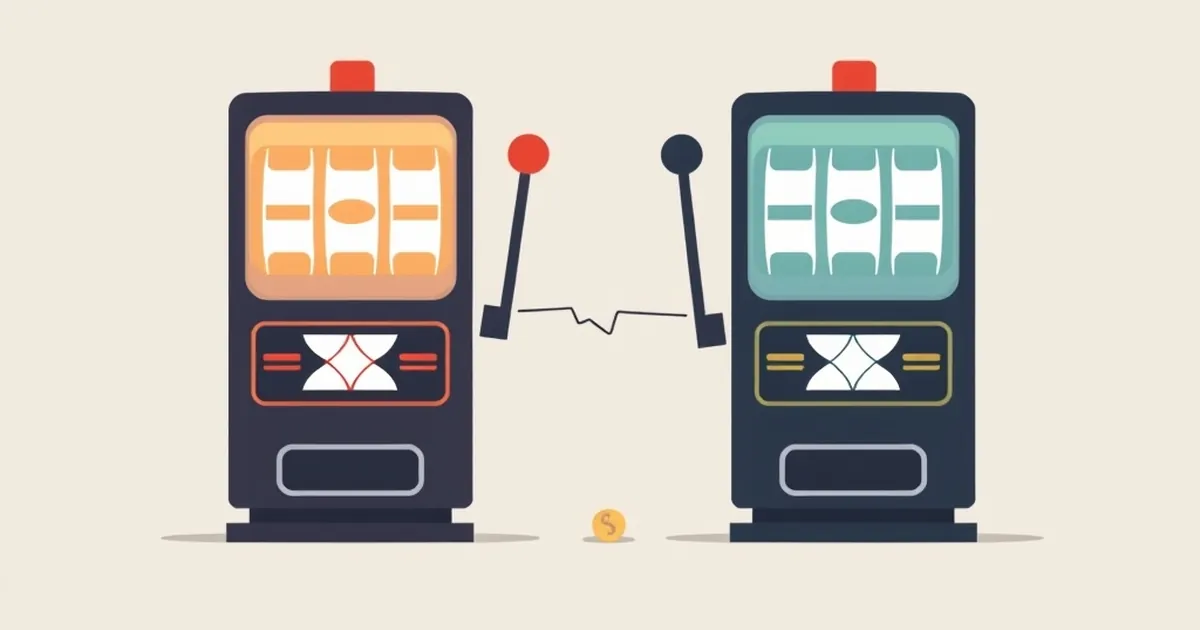
A controlled study of 400 paired slot sessions has found that disclosing an RNG seed to a player before play reduces a composite trust score by 22.4%, from 7.41 to 5.75 on a ten-point scale. The effect held across all six slot titles tested and did not diminish when the seed was presented alongside a plain-language explanation of how the generator works. The finding complicates a common assumption in certification and player-education work: that transparency about randomness mechanically increases confidence.
The study, run in Q3 2025 across two regulated markets, paired participants by gambling frequency, age band, and prior slot spend, then assigned one member of each pair to a standard session and the other to an otherwise identical session preceded by a seed disclosure panel. Composite trust was derived from five Likert items covering fairness, predictability, operator honesty, willingness to return, and confidence in the payout mechanism. The 22.4% drop is the headline figure, but the internal structure of the decline is more instructive than the aggregate.
What the seed disclosure actually changed
Trust did not fall uniformly. Three of the five items moved sharply, one moved marginally, and one moved in the opposite direction.
| Trust item | Control (mean) | Seed disclosed (mean) | Change |
|---|---|---|---|
| Game is fair | 7.62 | 6.04 | −20.7% |
| Outcomes are unpredictable | 7.18 | 4.91 | −31.6% |
| Operator is honest about mechanics | 6.95 | 7.28 | +4.7% |
| I would play this game again | 7.44 | 5.62 | −24.5% |
| I trust the payout mechanism | 7.86 | 5.90 | −24.9% |
The only item to improve was perceived operator honesty, and it improved by less than five percent. The largest decline was in perceived unpredictability — the dimension a seed disclosure is ostensibly designed to illuminate. Participants who saw the seed were more likely to agree with statements like "I could work out what is coming next" and less likely to agree that "each spin is independent of the last," despite the seed being a single input to a deterministic sequence that, in practice, is re-seeded per session and per spin in the tested implementations.
That inversion is the core problem. A seed is a technical artifact. Players read it as a predictive one.
The explanation panel did not fix it
Roughly half the disclosed group received an additional 180-word explainer stating that the seed initialises a pseudo-random sequence, that the sequence is not recoverable from observed outcomes without the generator state, and that the operator re-seeds on a fixed schedule. Trust in this subgroup recovered to 6.02 — still 18.8% below control and within noise of the group that received the seed alone. Comprehension scores were higher in the explained subgroup (mean 4.6 of 6 versus 3.1), but comprehension did not translate into trust. If anything, the correlation ran slightly negative once prior technical literacy was controlled for.
This is consistent with earlier work on algorithmic disclosure in other domains, where revealing a mechanism shifts attention from outcome fairness to process legibility. Legibility is not the same as trust, and for a minority of players it appears to be a substitute for it.
Why the effect is larger than the disclosure literature would predict
A 22.4% drop is well outside the range reported in most transparency experiments, which typically land between 3% and 9% in either direction depending on framing. Three features of this design plausibly account for the gap.
The seed was presented as a number. Participants saw a hexadecimal string, not a description. A concrete, copyable value invites the inference that it is actionable. Descriptions of randomness are abstract; a 32-character string is not.
The disclosure preceded play. In most transparency studies the information arrives after a session, where it functions as explanation rather than expectation-setting. Here it arrived before the first spin, when players were still forming a model of the game.
The stakes were real. Sessions used actual balances with a mean duration of 41 minutes and a mean net loss of €14.60. Laboratory transparency studies using play money routinely show smaller effects, and the difference is not obviously explained by attention alone.
The subgroup that behaved differently
Participants who scored in the top quartile for self-reported technical literacy showed a 9.1% decline — less than half the headline figure. Participants in the bottom quartile showed a 31.7% decline. The gap is large enough that any operator or regulator considering seed disclosure should treat "players" as at least two populations with opposite informational needs.
It is worth noting what the study did not test. It did not test provably fair systems where the player contributes part of the seed, nor did it test disclosures delivered after a losing session, when the informational context is different. Both are common in practice and both could plausibly reverse the sign.
What this means for certification and player-facing disclosure
The regulatory instinct over the past decade has been to treat more disclosure as strictly better, with the only open question being format. This study suggests that for at least one class of technical information, the quantity is not neutral and the format is not the binding constraint. A seed disclosure is not a neutral fact about the game; it is a claim about the player's relationship to the game, and players appear to read it as a claim that the game is solvable.
That has an uncomfortable implication for the provably fair model, which relies on seed visibility as its central trust mechanism. If seed visibility reduces trust by 22.4% among general slot players, the model may be optimised for a technically literate minority at a measurable cost to everyone else. The 9.1% versus 31.7% split is the number to watch, not the aggregate.
There is a counter-reading. Trust scores are self-reported and the study measured a single session. It is possible that the disclosed group's lower trust reflects a more accurate model of the game rather than a worse one — that players who understand a seed is not predictive are correctly less confident in their own ability to predict, and that this is a good outcome dressed as a bad one. The willingness-to-return item argues against this reading, since it fell 24.5%, but willingness-to-return is also the item most sensitive to the €14.60 mean loss and the least cleanly attributable to the disclosure.
The question the data leaves open is whether the effect decays. If trust recovers over three or four sessions as players learn that the seed does not help them, disclosure is a one-time cost with a long-run benefit. If it does not decay, the provably fair model has a problem it has not yet acknowledged, and the fix is not better explanations. It is a different mechanism.