The Case for Rereading: Depth Over Breadth
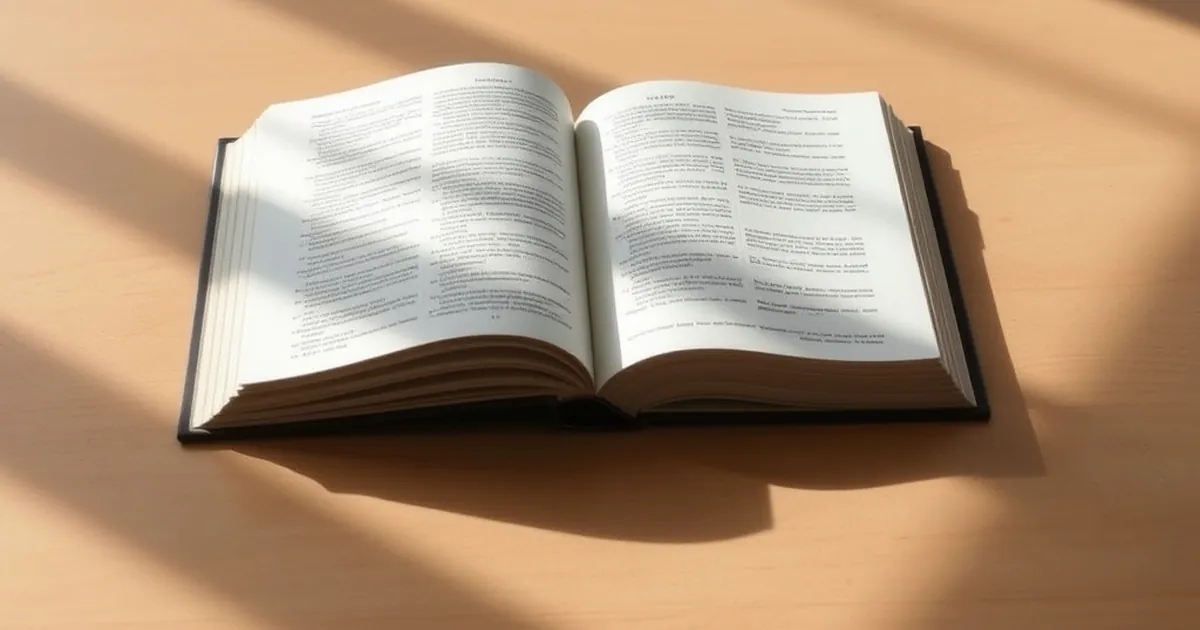
Every year, thousands of new books are published in English alone, and the cultural pressure to keep up is immense. We are conditioned to treat reading as a consumption metric—a tally of titles finished, a shelf of spines faced outward for social proof. But what if the most intellectually valuable reading you will ever do is not the next new release, but the book you already own and loved five years ago?
The Cognitive Case for Revisiting
The argument for rereading rests on a fundamental truth about how human memory and comprehension work: you cannot absorb a complex argument or a richly layered narrative in a single pass. When you read a book for the first time, your brain is busy with the cognitive overhead of basic comprehension—tracking characters, following a plotline, or parsing unfamiliar terminology. This leaves little cognitive bandwidth for the deeper work of synthesis, critique, or personal application.
Comprehension Is Not a One-Time Event
Consider the experience of reading a dense work of non-fiction, such as Yuval Noah Harari’s Sapiens or Daniel Kahneman’s Thinking, Fast and Slow. The first reading is often a kind of intellectual firehose: you are hit with dozens of interconnected ideas, and you likely retain only a fraction of them. A second reading, by contrast, allows you to move from what the author says to how they build their case. You begin to notice the scaffolding of the argument, the counterexamples they chose to include, and the assumptions they left unexamined. This is where real learning occurs.
The same principle applies to fiction. A first reading of a novel like Kazuo Ishiguro’s The Remains of the Day might leave you moved by the story of Stevens the butler. A second reading reveals the narrator’s profound unreliability—the subtle gaps in his memory, the self-deceptions embedded in his language. The book becomes a different, richer object entirely.
The Problem with the "Breadth-Only" Mindset
Modern reading culture, amplified by platforms like Goodreads and annual reading challenges, has created a perverse incentive structure. The goal is often a number—52 books a year, 100 books a year—rather than a depth of understanding. This approach treats books as items to be checked off a list rather than as artifacts to be lived with.
The Illusion of Productivity
There is a seductive feeling of accomplishment that comes from adding a book to your "read" list. It feels productive. But this feeling is often deceptive. A study published in Applied Cognitive Psychology found that readers who engaged in "speed reading" techniques retained significantly less information than those who read at a normal pace. The breadth-first approach to reading is, in many ways, speed reading writ large: you cover more ground, but you retain less of the terrain.
The Social Pressure to Move On
It is difficult to justify spending three weeks rereading The Great Gatsby when everyone on your social feed is discussing the hot new debut novel. There is a quiet social cost to rereading. It can feel like you are falling behind. But this is a manufactured anxiety. The most respected thinkers, from Mortimer Adler to Harold Bloom, have consistently argued that the mark of an educated person is not the number of books they have read, but the number of books they have truly mastered.
A Concrete Example: The Two-Read Transformation
Let me offer a brief personal anecdote. I first read Robert Caro’s The Power Broker during my final year of university. It is an 1,100-page biography of Robert Moses, the master builder of New York. My first read took six weeks of determined effort. I finished it feeling impressed by Caro’s research but overwhelmed by the sheer volume of detail about zoning laws and bridge construction.
Three years later, I picked it up again. This time, I knew the story. I was not reading to find out what happened. I was reading to understand how power works. I noticed how Caro structured each chapter to build a case incrementally. I saw the rhetorical techniques he used to make technical material gripping. I began to see patterns in Moses’s behavior that I had missed entirely—the way he systematically dismantled democratic oversight. The second reading was not a repetition; it was a transformation. The book became a case study in institutional power rather than a biography of a single man.
How to Build a Rereading Practice
If you are convinced that rereading has value, the practical question becomes: how do you integrate it into a reading life without feeling like you are stagnating?
Choose Books That Reward Depth
Not every book merits a second reading. A light thriller or a self-help book with one core idea likely does not need to be revisited. Focus your rereading energy on books that are "inexhaustible"—works that have layers of meaning, complex arguments, or masterful prose. These are typically books that have already stood the test of time for at least a decade. Classics of literature, philosophy, and history are obvious candidates, but so are well-regarded works of narrative non-fiction and literary fiction.
Create a Rereading Rhythm
You do not need to abandon new books entirely. A sustainable approach might be to dedicate every third or fourth book to a reread. Or you could set a seasonal practice: one reread per quarter. The key is to make it intentional rather than accidental. Schedule it the way you would schedule an important meeting with a colleague—because that is what it is: a meeting with a past version of yourself and a text that has changed.
Use Marginalia to Bridge Readings
One of the most powerful tools for rereading is the practice of writing in your books. On your first read, underline passages that strike you, write questions in the margins, and note your emotional reactions. When you return to the book years later, you are not just reading the author’s words; you are reading a dialogue between the author and your former self. You can see where your younger self was naive, where they were prescient, and where they missed the point entirely. This creates a record of your own intellectual growth.
The Forward-Looking Case for Rereading
The pressure to read more, faster, and more broadly is not going away. But the world is not running out of good new books. What is scarce is the time and attention required to truly understand the best ones. Rereading is a bet against the shallow consumption that defines so much of modern life. It is a commitment to the idea that a single great book, properly understood, is worth more than a hundred books skimmed and forgotten.
The next time you finish a book that moved you, resist the urge to immediately queue the next title. Put it on your shelf and make a note in your calendar for six months from now: "Read this again." You may find that the book you remember is not the book you will discover. And that discovery is the entire point.