The Fractured Page: Why Finishing Fewer Books May Mean Reading More
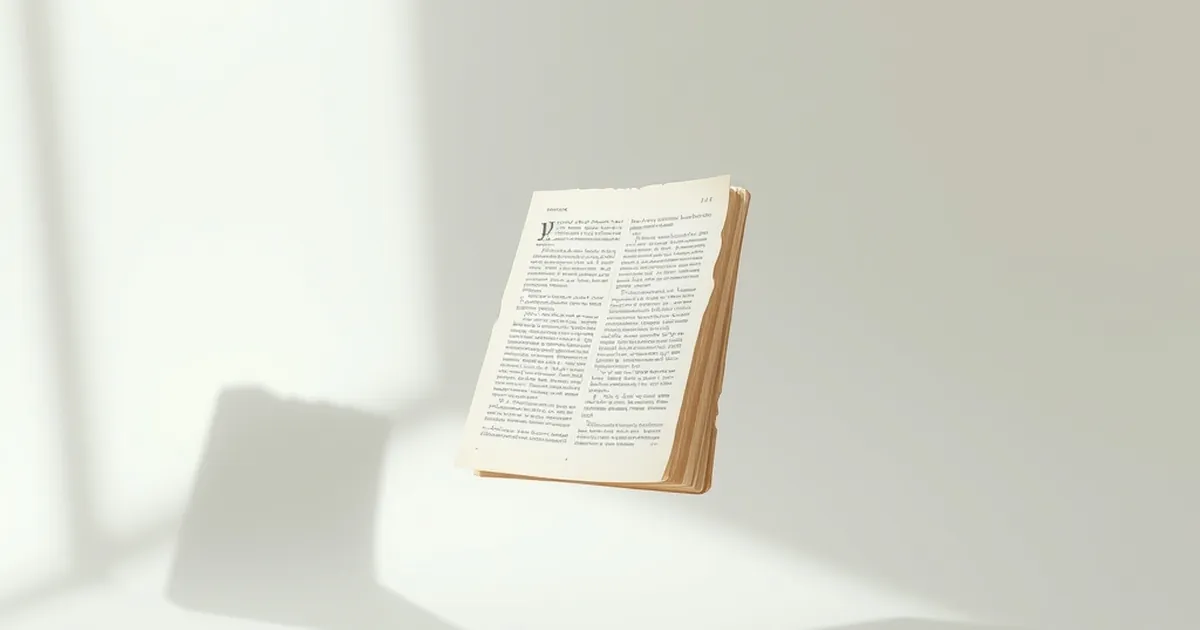
We are taught, from a young age, that a book is a linear contract: a beginning, a middle, and an end. To leave that contract unfulfilled—to set a volume aside before the final page—feels like a moral failing, a mark of intellectual laziness. But what if the opposite is true? What if the relentless compulsion to finish every book we start is the very thing that prevents us from reading more—more deeply, more widely, and with greater critical engagement?
The modern reader is caught in a paradox of abundance. We have access to more books than any generation in history, yet we often feel as though we are reading less. The solution may not lie in reading faster or choosing shorter books, but in a radical re-evaluation of our relationship with the unfinished text. To read more, we may need to become comfortable with the fractured page.
The Tyranny of Completion
The drive to finish a book is not merely a personal quirk; it is a culturally ingrained habit with deep roots in our educational systems and economic structures.
The Educational Imperative
From primary school through university, we are assessed on our ability to complete assigned texts. A student who abandons Moby-Dick after fifty pages is unlikely to pass the exam on the symbolism of the white whale. This pedagogical model creates a binary view of reading: a book is either “finished” (success) or “unfinished” (failure). It teaches us to prioritize the destination over the journey, the final verdict over the exploratory process.
The Sunk Cost Fallacy in Reading
This psychological trap is perhaps the most powerful force keeping us tethered to books we no longer enjoy. We have already invested six hours in a dreary 400-page novel. The logic of the sunk cost fallacy insists that if we stop now, those six hours are wasted. We continue, hoping for a redemption arc that rarely comes, and in doing so, we waste another four hours that could have been spent on a book that genuinely excites us. The cost of finishing is often far higher than the cost of quitting.
The Case for Curated Abandonment
Abandoning a book should not be viewed as a failure of will, but as a sophisticated act of curation. It is a skill that separates the passive consumer from the active, critical reader.
The Opportunity Cost of a Bad Book
Every hour spent slogging through a text that fails to engage you is an hour stolen from a book that might change your mind. Consider the mathematics of a reading life. If you read for one hour per day, you have roughly 365 hours per year. A single mediocre 500-page novel might consume 12–15 of those hours. Over the course of a year, finishing just four or five such books can consume nearly a fifth of your total reading time. The question is not “should I finish this book?” but “what am I choosing not to read by finishing it?”
A Concrete Example: The Forty-Page Rule
I once forced myself through a critically acclaimed literary novel for three weeks. It was lauded for its prose and its deep psychological insight. Every night, I would read ten pages, waiting for the insight to arrive. It never did. After 180 pages, I had a list of complaints and zero moments of genuine connection. I finally set it aside.
The next book I picked up—a slim, unfashionable work of narrative non-fiction—I devoured in a single weekend. I learned more about the human condition from that 250-page book than I had from the 180 pages of the acclaimed novel. The first book had made me feel like a bad reader. The second book reminded me that I was a good reader who had simply been reading the wrong book. That experience cemented a personal rule: if a book has not hooked me in forty pages, it gets set aside—not permanently, but with a clean conscience. Some books are for later; some are for never.
The Fragmented Reading Practice
Adopting a policy of strategic abandonment does not mean reading only easy, disposable content. It means developing a new kind of reading discipline.
Multimodal Reading as Deep Engagement
The most effective readers I know do not read in a straight line. They read three books at once: a dense work of theory in the morning, a novel at lunch, and a collection of essays or poetry in the evening. They skip chapters. They read the ending first. They mark pages to return to later. This fragmented approach is not a sign of poor attention; it is a form of intellectual foraging. It allows the mind to make connections across texts, to let ideas marinate, and to approach each book with fresh energy rather than weary obligation.
The Permission to Be a "Quitter"
We need to reframe the language we use about unfinished books. Instead of saying “I gave up on that book,” try “I suspended that book” or “I deferred that book for now.” This is not a permanent judgment on the book’s quality, but a judgment on its fit for your current intellectual and emotional state. A book you abandon in your twenties might be the perfect companion in your forties. The act of abandonment is not a closing of a door; it is a bookmark placed at a future date.
Practical Takeaways for the Fractured Reader
So how does one translate this philosophy into a daily reading practice? It requires a small, deliberate shift in mindset and habit.
First, establish a personal abandonment threshold. It could be a number of pages (thirty or fifty), a time limit (one hour), or a simple feeling: the moment you realize you are reading the same sentence for the third time without comprehension, it is time to stop. Do not negotiate with yourself. Honor the threshold.
Second, keep a "suspended" list. Instead of feeling guilty about the books you have not finished, keep a record of them. Note the date and the point at which you stopped. When you return to that list in six months, you may find that some titles call to you again, while others feel like relics of a different person. This list is not a graveyard; it is a map of your changing intellectual terrain.
Third, practice the art of the quick start. When you do abandon a book, have the next one ready. Do not allow the guilt of an unfinished book to create a reading gap. The moment one book is set aside, open the next. This keeps the momentum of reading alive and reinforces the idea that reading is an active, ongoing process, not a series of discrete tasks to be completed.
A Forward-Looking Note
The future of reading may well be more fractured, not less. Our attention is constantly pulled in multiple directions, and the linear, cover-to-cover reading experience is becoming one option among many, rather than the only valid one. The challenge for the serious reader is not to fight this fragmentation, but to manage it with intention. The goal is not to finish every book you start. The goal is to finish the year feeling that you have read deeply, widely, and with joy. To do that, you must be willing to leave a great many books behind. The fractured page is not a sign of failure. It is the first step toward a richer, more engaged reading life.