The Index Card Method of a Dispersed Reading Life
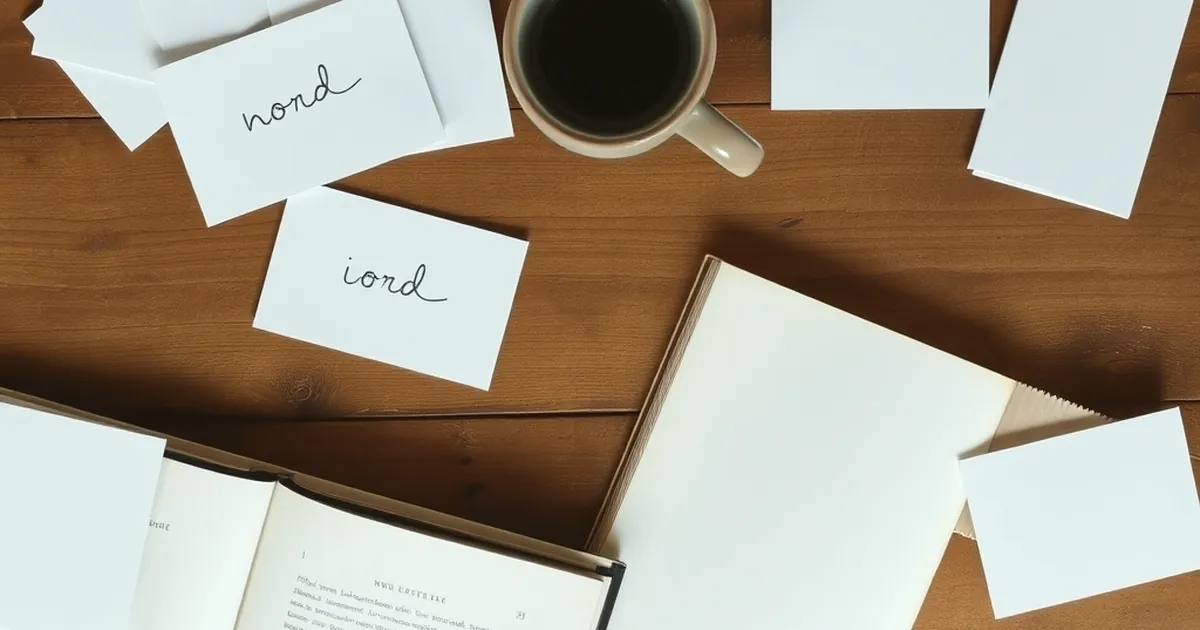
Every serious reader knows the feeling: you finish a book on a Tuesday night, and by Friday the shape of its argument has already begun to blur. The characters remain, but the thesis escapes. The historical dates linger, but the causal chain dissolves. This is not a failure of attention but a failure of system. How does one maintain intellectual coherence across dozens of books read in different rooms, on different devices, and in different emotional states, without turning the act of reading into a bureaucratic chore? The answer may lie not in sophisticated software or elaborate note-taking apps, but in a method invented a century before the personal computer, and simplified to its absolute essence by a Chicago professor who distrusted his own memory.
The index card method, stripped of its archival mystique, is a discipline of fragmentation. It acknowledges a hard truth about dispersed reading: you will not remember where you read something, but you must remember what you thought when you read it. This article argues that the index card—a physical, 3x5 inch rectangle of cardstock—remains the most effective technology for synthesizing a reading life that is scattered across commutes, lunch breaks, and late-night sessions. The method works precisely because it does not try to capture the book. It captures the event of reading.
The Problem of the Dispersed Reading Life
Your reading life is not a library. It is a series of interruptions. You read a chapter of a philosophy book on your phone while waiting for a doctor’s appointment. You listen to a history audiobook while running. You skim a translated novel in bed, half-asleep. Each of these contexts produces a different kind of cognitive residue. The problem is not that you read too much, but that you read in too many modes.
Digital highlighting tools fail here. They assume a linear, seated, single-text engagement. They capture the sentence but not the situation. When you highlight a passage on a Kindle, you save the words, but you lose the irritation, the sudden clarity, or the objection that rose in your throat as you read. The index card, by contrast, forces a physical act of transcription. That act—writing by hand on a small, bounded surface—compels you to decide what matters in that moment, not what might matter for a future paper.
The deeper issue is cognitive dispersion. When you read across formats, your brain does not automatically integrate the insights. It stores them in separate memory compartments: the "phone reading" compartment, the "desk reading" compartment, the "bathroom reading" compartment. The index card method functions as a deliberate forcing function to break these compartments down. By writing a card immediately after a reading session, you create a single, unified output stream for all input channels.
The Mechanics of the Method
The core protocol is deceptively simple. After any reading session—regardless of length, format, or location—you write one index card. The card contains three elements: a bibliographic trigger, a single core idea, and a personal reaction. The bibliographic trigger is not a full citation. It is a short code: author, title abbreviation, page number. The core idea is not a quote. It is a paraphrase in your own words, limited to one or two sentences. The personal reaction is the crucial part: a sentence that begins with "This reminds me of..." or "This contradicts...".
The Rule of One
The most important constraint is the rule of one. One card per session. One idea per card. One sentence of reaction. This is not a limit; it is a filter. When you are forced to distill a thirty-minute reading session into a single card, you are forced to identify the single most salient cognitive event. Was it a new fact? A logical flaw? An emotional resonance? By choosing one, you train your attention to prioritize significance over volume.
The Physical Argument
Why paper? Why not a note-taking app? Because paper has a spatial dimension that digital notes lack. A card has a front and a back. It has weight. It can be shuffled, fanned, or dropped. The physicality creates a tactile memory trace. When you later hold a card from a book read in a Tokyo hotel room, the card's slight wear—the coffee ring, the dog-eared corner—triggers a contextual recall that a database cannot replicate.
The Filing System
The filing system is where most people overcomplicate the method. You do not need a taxonomy. You need a chronological box. Each card is numbered sequentially and dated. Once a month, you review the box and pull out cards that seem to form clusters. You do not file by subject; you file by time. This is a deliberate inversion of library logic. The chronological order preserves the sequence of your thinking, which is often more valuable than the subject matter.
A Concrete Example: Reading Across Three Continents
Let me offer a personal anecdote that illustrates the method's power. Last year, I was reading three books simultaneously: a dense monograph on Ottoman bureaucracy, a slim volume of Brazilian modernist poetry, and a technical manual on database architecture. Each was tied to a different project, a different device, and a different time of day. The Ottoman book was read in the morning, at a desk. The poetry was read on a bus. The database manual was read at night, on a tablet.
Without the index card method, these three texts would have remained in hermetically sealed mental compartments. But the method forced a collision. On a Tuesday, I wrote a card for the Ottoman monograph, noting that the vizier's record-keeping system resembled a "write-once, read-many" storage model. The next day, while reading the poetry, I wrote a card about the poet's use of fragmentation as a political gesture. By Friday, I had a third card on the database manual's discussion of redundant data. Laying these three cards side by side, the connection became obvious: all three were about the politics of storage. The vizier stored to control. The poet fragmented to resist. The database architect optimized to forget.
That insight—which now anchors an entire chapter of my current book project—did not come from any single source. It came from the physical juxtaposition of three cards produced in three different contexts. The method did not just capture my reading; it generated new knowledge through accidental adjacency.
The Cognitive Science Behind the Card
This method is not nostalgic whimsy. It aligns with established research on the "generation effect" and "desirable difficulties." When you paraphrase an idea in your own words, you create a stronger memory trace than when you copy a quote verbatim. The act of writing by hand activates more complex neural networks than typing. The constraint of the small card forces cognitive effort, and that effort is what encodes the memory.
Spaced Repetition Without the App
The monthly review of the card box functions as a primitive but effective spaced repetition system. Unlike an app that schedules reviews at optimal intervals, the monthly review introduces a random interval. This randomness is actually beneficial. It mimics the "testing effect" where retrieval is strengthened by the effort of recall. When you flip through a month's worth of cards, you are not reviewing a curriculum; you are reconstructing a thought trajectory.
The Antidote to FOMO
The index card method also addresses a modern anxiety: the fear of missing an important detail. Because the card forces you to choose one idea, you are implicitly acknowledging that the other ninety-nine ideas are expendable. This is a liberating act. It declares that your reading life is not a hoard of information but a sequence of transformations. The card is not a transcript; it is a receipt of change.
Practical Variations for the Digital Native
You do not have to abandon your devices entirely. The method works with a hybrid approach. Use your e-reader for the act of reading, but keep a small stack of blank cards and a pen next to your reading chair. For audiobooks, pause after each chapter and dictate a card into your phone's voice memo app, then transcribe it later. The key is the format of the card—the bounded, single-idea structure—not the medium of production.
For the truly global reader, the method has an added benefit: portability. A pack of 100 cards weighs less than a smartphone and requires no battery. You can read a book in a café in Lisbon, write a card on a park bench in Buenos Aires, and file it in a shoebox in your home office in Singapore. The system travels with you, but it does not require a cloud connection.
A Forward-Looking Note on Intellectual Craft
The index card method is not a system for organizing books. It is a system for organizing attention. In a world where reading is increasingly fragmented, dispersed, and interrupted, the deliberate act of writing one card per session is a small rebellion against cognitive entropy. It says: this moment of reading mattered, and I will give it a physical form.
The future of reading may be increasingly visual, social, and algorithmic. But the future of thinking will always require a moment of solitary synthesis. The index card is that moment, made tangible. Start tonight. After you finish your current chapter—whether on a glowing screen or a yellowed page—take a card, write one sentence, and file it. The box will fill. The connections will emerge. The scattered reading life will become a coherent intellectual biography, one 3x5 inch fragment at a time.