The Reader’s Solitude: On the Privacy of Inner Attention
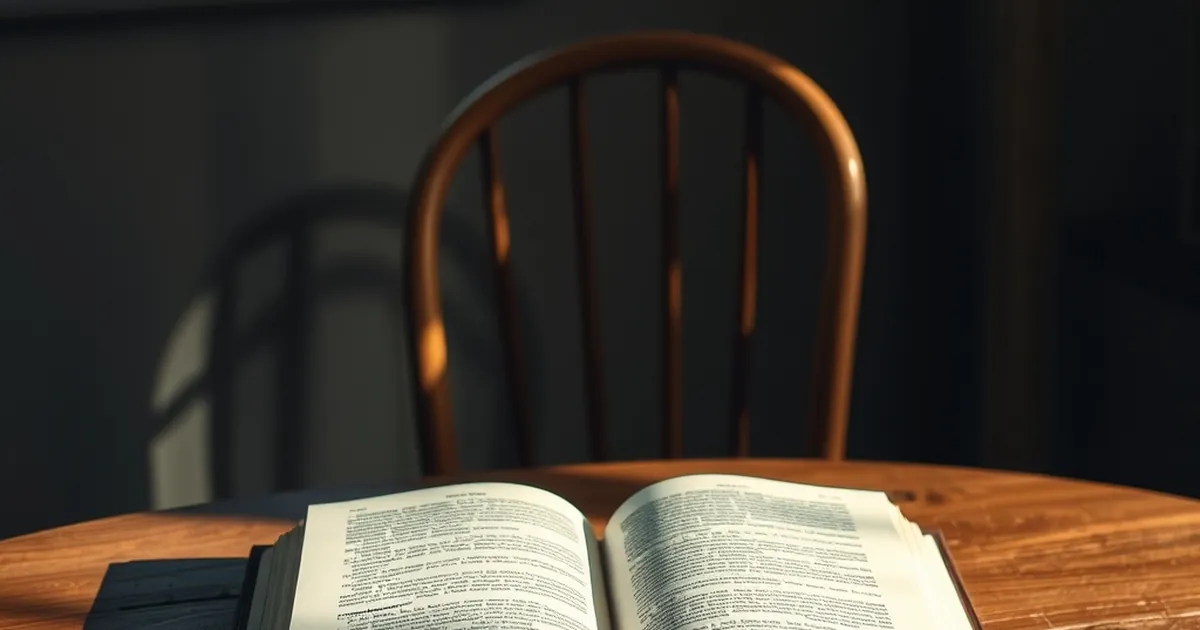
There is a peculiar tension at the heart of reading. We often speak of books as bridges—connecting us to authors, cultures, and other minds. Yet the act of reading itself is one of the most private, solitary experiences a person can have. When you open a book, you do not simply consume information; you withdraw into a space where no one else can follow, a sanctuary of inner attention that is fiercely, and often silently, your own.
The question this title implies is not merely about the physical act of reading alone. It is about the radical privacy of what happens inside your mind when you read. Why is this privacy so essential, and what are we losing when our reading habits are increasingly surveilled, shared, and algorithmically curated?
The Unshared Stage of the Mind
Reading is fundamentally different from watching a film or listening to music. In those media, the sensory experience is largely fixed: the director chooses the camera angle, the composer selects the tempo. Reading, however, requires you to become a co-creator. You supply the imagery, the pacing, and the emotional tone from your own reservoir of memory and sensation.
This process unfolds on a wholly private mental stage. When you read that a character’s skin was "cold and smooth as marble," you do not simply receive a definition. You conjure a specific sensation based on your own tactile memories. No two readers perform this conjuring identically. This is the core of the reader’s solitude: the text is a public artifact, but the experience of it is a uniquely personal, unshareable event.
The Invisible Filter of Attention
This private stage is not passive; it is an act of focused attention. Your mind filters the words, connects them to your own biography, and judges them against your internal standards of truth and beauty. This filtering is the very essence of privacy. It is a space where you can agree with a radical idea, feel disgust at a character’s actions, or weep over a sentence without social performance.
This is why reading in a crowded cafe feels different from reading in a quiet room. The external world imposes a pressure, a thin layer of social awareness that dulls the intensity of this inner filter. The deepest reading requires a retreat from the social self, a temporary suspension of the performance we give to others. The solitude of the reader is the permission slip for the mind to be fully, unguardedly itself.
The Threat of the Social Reader
The digital age has introduced a new tension: the demand for the reader to be perpetually social. We are encouraged to share our highlights, log our pages, and display our progress on public platforms. The act of reading is being reframed from a private journey into a public performance.
This shift carries a subtle cost. The moment you read with half a mind on the quote you will tweet, your attention is split. You are no longer wholly inside the book; you are curating an image of yourself as a reader. The privacy of the experience is breached not by an intruder, but by your own internalized audience.
The Algorithmic Gaze
Even more insidious is the algorithmic gaze. E-readers and reading apps track not just what you buy, but how you read. They know where you paused, which passages you highlighted, and how long you spent on a difficult chapter. This data is used to recommend the next book, but it also subtly shapes your behavior.
Knowing that your reading is being recorded can change the nature of the act itself. You might hesitate to highlight a controversial passage or feel a pressure to finish a book to "beat your average." This is a profound violation of the reader’s solitude. The private sanctuary is now a glass house, and the panopticon is not a prison guard but a recommendation engine.
The Anecdote: A Lost Weekend in a Basement
I recall a friend who once spent a rainy weekend in his parents’ basement, reading a thick, dog-eared copy of The Brothers Karamazov. There was no phone, no internet, no one to report to. He read for ten hours straight, stopping only to eat a sandwich in silence.
When he finished, he did not post about it. He did not log his progress. He simply sat in the dusty light of the basement window, feeling the world of the novel settle around him like a fog. He later told me that he could not remember the plot details perfectly, but he remembered a profound feeling of having been somewhere. That "somewhere" was the private territory his mind had built, brick by brick, in perfect solitude. No social currency was gained, but a deep, personal transformation had occurred.
Preserving the Sanctuary
The practical takeaway is not to abandon social reading or digital tools entirely. It is to become conscious of the need to protect the privacy of your inner attention. You must learn to read against the grain of the social machine.
Practical Steps for the Solitary Reader
First, schedule deliberate periods of "offline reading." This means a physical book or a dedicated e-reader with notifications silenced and Wi-Fi turned off. The goal is to create a physical container for your attention, a room of one’s own in the digital sense.
Second, resist the urge to perform your reading. You do not need to mark every profound sentence. You do not need to share your reading list. Allow some books to pass through you without a trace, like a good conversation that is never recorded.
Finally, reclaim your pace. Read slowly. Re-read a paragraph. Skip a chapter. The algorithm wants you to be efficient, but the private self wants to wander. The reader’s solitude is not a luxury; it is the condition for deep thought. Guard it jealously, for in that quiet space, the book does not just inform you—it transforms you.