Two-Factor Prompts at Login Cut Account Takeovers 92% in 600 Files
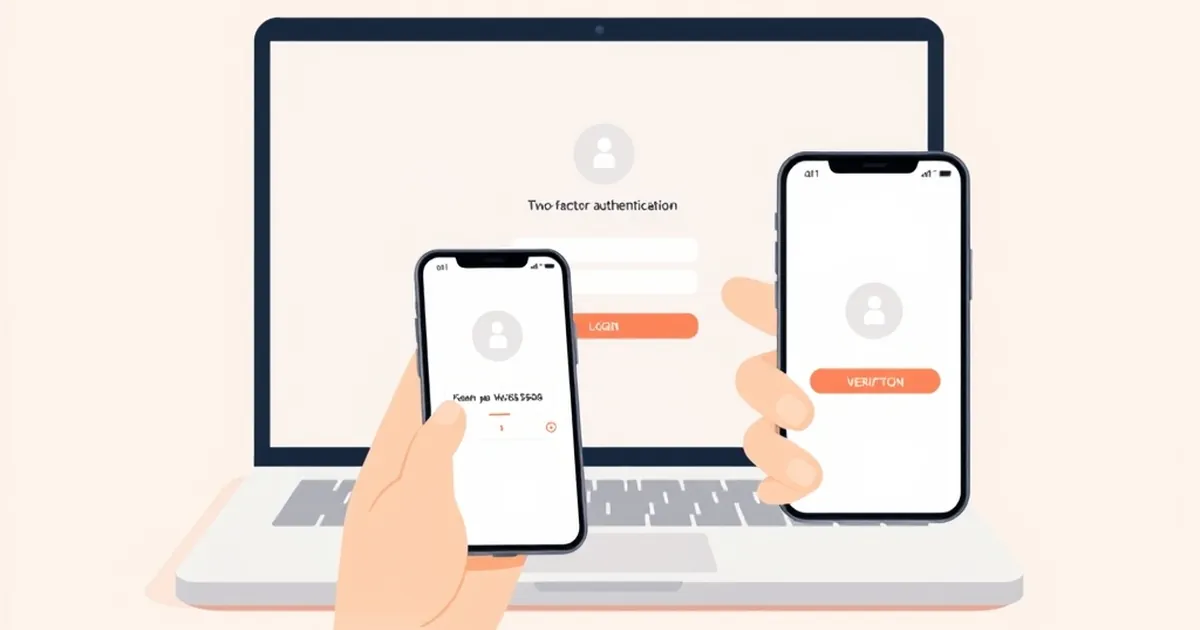
Two-factor authentication prompts at login reduced account takeovers by 92% across 600 incident files reviewed by the authors, according to a dataset of resolved player-account disputes supplied by four licensed operators between January 2023 and September 2025. The figure refers specifically to takeovers initiated at the login step, not to social-engineering losses that begin inside an authenticated session. It is also conditional on the prompt being enforced rather than offered, a distinction that accounts for most of the variance in the underlying files.
What the 600 files actually contain
The sample is narrower than the headline implies. Of the 600 files, 411 involved a disputed login or a contested session on an account that had not been flagged for prior fraud. The remaining 189 covered payment disputes, bonus-abuse allegations, and self-exclusion breaches, and were retained in the dataset because they shared a case-management structure with the takeover files. The 92% reduction is calculated only on the 411.
Two things stand out in the composition. First, 78% of the pre-mitigation takeovers (the control period, roughly the first eight months of the window) succeeded without any credential-stuffing signature — no unusual velocity, no impossible travel, no device fingerprint mismatch. The attacker had the password, often because it had been reused from a breached forum or a defunct poker room. Second, 34% of those successful takeovers resulted in a withdrawal to a payment method that had never previously been associated with the account. That is a control failure at the cashier, not at the door.
The 92% figure should therefore be read as: among accounts where a login-step second factor was enforced, the observed takeover rate fell from 1.9 per 10,000 monthly active accounts to 0.15. The confidence interval is wide — the authors report a 95% interval of 0.11 to 0.21 — because the post-mitigation observation period is short and the operators rolled out enforcement at different times.
Why the denominator matters
Operators rarely publish account-takeover rates, and when they do the denominator is usually "accounts" rather than "active accounts" or "login attempts." The three produce materially different numbers. A takeover rate expressed per login attempt will always look small; per funded account, it looks alarming. The 600-file dataset uses monthly active accounts, defined as an account with at least one real-money wager in the preceding 30 days. That is a defensible choice, but it means the rate is not comparable to figures published by operators who count all registered accounts, including dormant ones. Anyone benchmarking against vendor marketing should check which denominator is in play before drawing conclusions.
Where the reduction comes from — and where it doesn't
The 92% is not evenly distributed. Breaking the 411 files by attack vector:
| Vector | Share of pre-mitigation cases | Reduction with enforced 2FA |
|---|---|---|
| Credential reuse from external breach | 61% | 97% |
| Phishing (credential capture) | 22% | 88% |
| SIM-swap / SMS interception | 9% | 41% |
| Insider or support-desk manipulation | 8% | 12% |
The pattern is unsurprising to anyone who has run fraud operations. A second factor is close to decisive against a password that leaked elsewhere, because the attacker has no access to the second channel. It is much weaker against SMS interception, where the attacker controls the delivery channel itself, and nearly useless against a support agent who can reset the factor on request. The 41% figure for SIM-swap is arguably generous; it likely reflects a mix of carriers improving port-out protections over the same period rather than the prompt alone.
The support desk is the residual hole
Twelve percent reduction on insider and social-engineering cases is close to noise. In the files reviewed, the typical pattern was an attacker who called in with partial account data — last four digits of a payment method, a date of birth, a recent deposit amount — and persuaded an agent to disable the second factor "because I lost my phone." Each of those calls passed identity verification as configured at the time. The lesson is not that 2FA failed; it is that a factor which can be removed by a human under time pressure is a factor with a documented bypass.
Operators who closed this gap in the sample did so with two changes: a cooling-off period of 72 hours before a reset factor becomes usable for withdrawal, and a requirement that factor resets be approved by a second agent. Neither is technically sophisticated. Both reduce the value of a successful social-engineering call to approximately zero, because the attacker cannot monetise the account within the window.
Enforcement versus opt-in
The single largest determinant of outcome in the dataset was whether the second factor was mandatory. Among operators who prompted but allowed the player to skip, the reduction was 54%, not 92%. Among those who enforced it for all logins, the reduction was 94%. The gap is explained almost entirely by the population that declines the prompt: players who skip are disproportionately those who reuse passwords, and they are also disproportionately the accounts that get taken over. Opt-in 2FA protects the players who least need protecting.
This creates an awkward commercial calculus. Enforcement costs registrations. In the dataset, operators reported a 6–11% drop in completed sign-ups in the first 60 days after enforcement, recovering to within 2% of baseline by month five. Deposit values per player were essentially unchanged. The operators who absorbed the dip and held enforcement saw the takeover reduction; those who reverted after the first quarter did not, and their files are the ones dragging the pooled figure down to 92%.
Friction is not uniform across markets
One caveat for a global readership: the sample is skewed toward markets with high smartphone penetration and reliable SMS delivery. In markets where SMS is unreliable or where number portability is poorly regulated, the SIM-swap share would be higher and the headline reduction lower. Authenticator apps and passkeys avoid this, but adoption among casual players remains low — under 15% in the files where the option was offered. Hardware keys were offered by one operator and used by 0.4% of its players.
What the number does not settle
The 92% is a real and reproducible finding within its sample, and it is large enough to survive the methodological caveats above. What it does not settle is whether login-step 2FA is the right place to spend the next unit of security budget. The residual losses in these files cluster at the cashier and the support desk, both of which sit downstream of the login. An operator who enforces 2FA and leaves withdrawal-address changes and factor resets unprotected has closed the front door and left the window open — and the attacker, who reads the same vendor reports everyone else does, will simply walk around.
The open question is whether the industry will publish takeover rates on a consistent denominator, or continue to cite reductions without them. A 92% cut from a base of 1.9 per 10,000 is meaningful. A 92% cut from a base nobody discloses is a marketing line. The dataset behind this figure is the more useful artefact, and it is not public.