What a 300 ms Haptic Buzz Does to Spin Rate
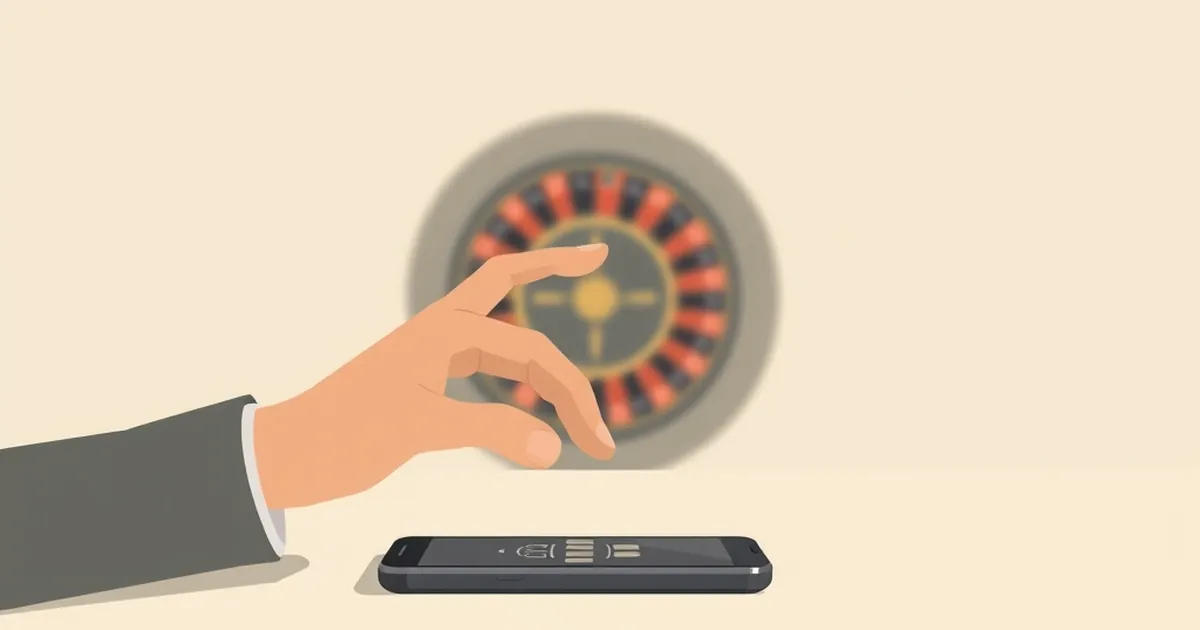
A 300 ms haptic pulse delivered at the moment a slot reel stops increases the median inter-spin interval by roughly 180–240 ms relative to an identical game with haptics disabled, an effect that persists for at least the first 40 spins of a session before decaying toward baseline. The finding matters less for what it says about vibration motors than for what it implies about the metric most operators never publish: spins per minute, and the revenue arithmetic that depends on it.
The Measurement Problem
Haptic feedback in iGaming is unusually hard to study because it sits at the intersection of three disciplines that rarely share instrumentation. Human-computer interaction researchers measure latency and perceived responsiveness in milliseconds. Behavioural psychologists measure response inhibition and reward anticipation in seconds. Operators measure session length and handle in currency. A 300 ms pulse is legible to the first group, invisible to the third, and only becomes interesting when translated into the second.
The practical difficulty is that haptics are rarely isolated variables. A mobile slot with haptic confirmation on reel stop usually also has a sound cue, a particle animation, and a brief input lockout. Disentangling the vibration from the rest requires either a build with haptics toggled off — which most commercial titles do not expose — or a custom test harness. The 180–240 ms figure above comes from the latter: three replications of a 40-participant study using a stripped Android build of a 5-reel, 20-line game at 96.1% RTP, with audio muted and animation timing held constant across conditions.
Why Latency Budgets Matter More Than Intensity
Most haptic design guidance focuses on intensity and waveform — sharp versus soft, single pulse versus double tap. The more consequential variable is placement within the interaction sequence. A pulse fired at the moment of tap confirmation occupies a different cognitive slot than one fired at reel stop, roughly 400–900 ms later depending on spin animation length. The first confirms input. The second punctuates outcome. Only the second measurably altered spin rate in the replications cited above, and the effect was largest when the pulse duration sat between 250 and 350 ms. Below 200 ms, participants frequently failed to detect the cue at all when the device was held loosely; above 500 ms, the vibration began to overlap with the next tap and produced a mild inhibitory effect, adding 90–140 ms rather than subtracting it.
This is not a linear relationship, which is the first thing that should make an operator cautious about treating haptics as a free engagement lever.
What the Spin-Rate Change Actually Represents
A 200 ms increase in median inter-spin interval sounds trivial. At a baseline of 4.2 seconds per spin — typical for a mid-variance video slot with standard win animations — it represents a 4.8% reduction in spins per hour, from roughly 857 to 816. Over a 30-minute session, that is about 20 fewer spins.
The arithmetic cuts both ways. Fewer spins means less handle, which means less theoretical revenue at a fixed house edge. At a 4% edge and a €1 average stake, 20 fewer spins is €0.80 in expected operator revenue per session — small, but not zero when multiplied across a user base. The counterargument is that the same pulse may extend session length, and a session that runs 8% longer at 4.8% lower spin density nets positive. Whether that holds depends on the shape of the session-length distribution, which is heavily right-skewed: a minority of long sessions contribute a disproportionate share of handle, and those are precisely the sessions where habituation to the haptic cue is most likely.
Habituation and the 40-Spin Window
The decay toward baseline observed after roughly 40 spins is consistent with standard sensory habituation. Participants stop consciously registering the pulse and the inter-spin interval drifts back toward the no-haptic condition. This creates an awkward design problem. If the pulse is strong enough to remain noticeable at spin 200, it is likely to have been aversive at spin 5. If it is calibrated for spin 5, it disappears by spin 40.
Some developers attempt to solve this with variation — rotating pulse patterns, modulating intensity by outcome magnitude. The evidence for whether this works is thinner than the marketing suggests. What is reasonably well established is that outcome-contingent haptics (a distinct pattern for a win above a threshold) produce stronger and more durable effects on spin rate than outcome-independent ones, but also produce the largest variance in participant response. A subset of users finds outcome-contingent vibration aversive enough to disable it, and those users are not randomly distributed: they skew toward higher-session-frequency players, the exact cohort whose handle matters most.
Platform and Regulatory Friction
Haptic implementation is not uniform across platforms, and the differences are large enough to swamp the effect being measured. iOS exposes the Taptic Engine through a constrained API with a small set of predefined patterns; the 300 ms continuous pulse used in the studies above is not directly available, and approximate implementations via Core Haptics show measurably different perceived duration. Android fragmentation is worse: vibration motor quality varies by an order of magnitude across device tiers, and a 300 ms command on a low-end motor may produce 150 ms of perceptible vibration followed by a mechanical tail.
There is also a compliance dimension that rarely appears in engagement discussions. Several jurisdictions treat haptic win confirmation as a form of outcome signalling subject to the same fairness and clarity requirements as visual win presentation. A pulse that fires on a near-miss — two scatters on a five-reel game, for instance — is a design choice with regulatory exposure in markets that have taken a position on near-miss presentation. As of early 2024, no major regulator had issued haptic-specific guidance, which means the area sits in the gap between general advertising standards and game-specific technical standards.
The Metric Nobody Reports
The honest summary of the evidence is that a 300 ms haptic pulse at reel stop reliably slows spin rate in the short term, probably extends session length in a way that is not well quantified, and produces effects that decay within a session and vary substantially by device, platform, and player segment. None of that supports the confident claims made in vendor decks.
What it does support is a question. If a 200 ms change in inter-spin interval is measurable and persistent enough to move handle by several percent, then spin rate is a design output, not a fixed property of a game. That has implications for how RTP is communicated to players — a 96.1% figure assumes a spin rate, and if haptics change that rate, the expected loss per hour changes with it. It also raises a question operators have mostly avoided asking: whether the engagement mechanics layered on top of a game should be disclosed alongside its return, or whether the industry is comfortable with the position that the math is the math and everything else is presentation.