Why Annotating Slowly Beats Accelerated Consumption
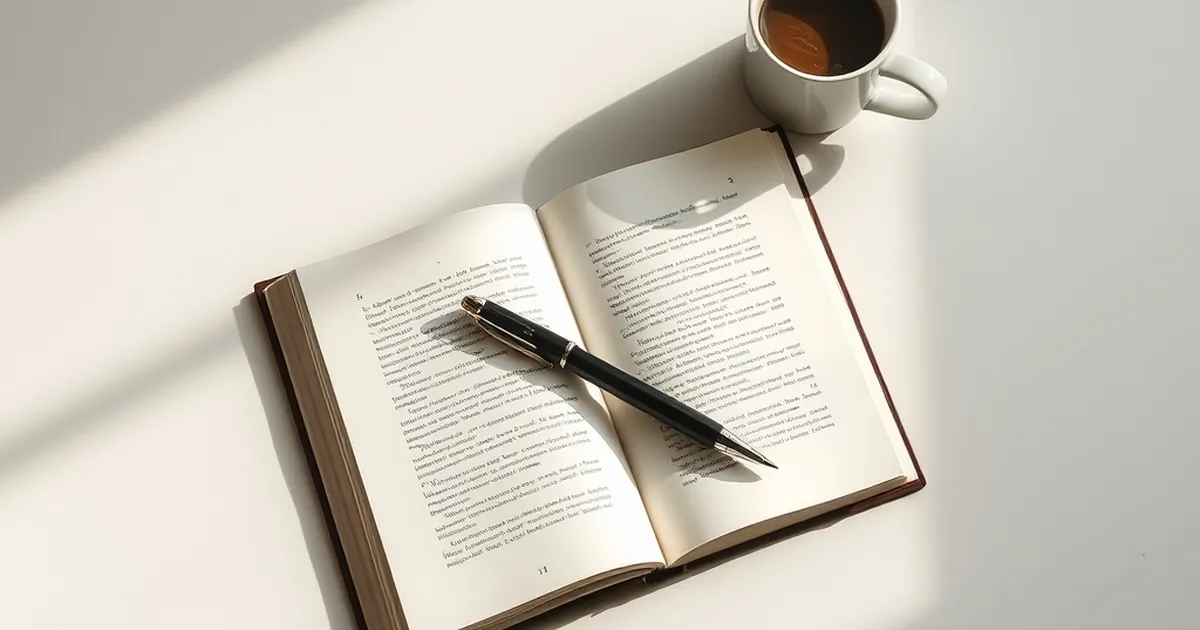
Every autumn, as new editions of classic works appear with fresh introductions and scholarly apparatus, a familiar ritual repeats: we buy them, stack them, and promise ourselves we will read them properly this time. Yet the pressure to finish books—to log them, summarize them, and move on—has never been higher. Why does the act of slow, deliberate annotation produce deeper understanding and longer retention than the rapid consumption of entire tomes, and what does this mean for how we should approach our reading lists?
The Cognitive Case for Slowing Down
Reading speed is not comprehension speed. When we skim a chapter in twenty minutes, our brains process the narrative arc or the main arguments, but we are largely skipping the synaptic work that turns information into knowledge. Annotation forces a different kind of engagement: it interrupts the flow, creating what cognitive scientists call a "desirable difficulty." This friction—stopping to underline, question, or paraphrase—signals to your brain that this material matters, triggering deeper encoding into long-term memory.
The research here is robust. Studies on the "generation effect" show that information we produce ourselves (e.g., a marginal note in our own words) is remembered far better than information we merely read. Annotation is a form of generation. When you write "this refutes Kant's categorical imperative" in the margin, you are not just recording a thought; you are actively constructing a new mental model that connects the text to your prior knowledge. Accelerated consumption, by contrast, treats reading as a passive download, which is why you often cannot recall a book's central thesis a week after finishing it.
The Problem with "Completion" Metrics
Our modern reading culture is obsessed with volume. Apps track pages turned, streaks maintained, and annual goals achieved. This gamification fundamentally misaligns our incentives. The goal of reading is not to reach the last page; it is to change your thinking. A book that takes you three months to read—because you are constantly stopping to argue with it—will have a more profound impact than three books you rush through in a weekend. The former becomes part of your cognitive architecture; the latter becomes a vague memory of a title on a screen.
Annotation as a Dialogue, Not a Defacement
There is a common fear, particularly among those who treat books as sacred objects, that writing in a book is a form of vandalism. I would argue the opposite. A heavily annotated book is a record of a conversation. It is a time-stamped snapshot of who you were when you read it. Your marginalia—the question marks, the exclamations, the "see page 204"—are the traces of your intellect meeting another's. That is not defacement; it is a palimpsest of your intellectual development.
The practice works best when it follows a specific protocol, not random scribbling. I have found that a simple three-tier system is effective for most non-fiction and literary fiction alike:
- Underlining for passages that seem important but whose significance you do not yet fully grasp.
- Vertical lines in the margin for passages you strongly agree or disagree with.
- A dedicated "dialogue margin" (the outer edge) for your own questions, rebuttals, or connections to other works.
This system forces you to make a judgment call on every paragraph. Is this worth a line? Is this a challenge to my worldview? The act of deciding is where the learning happens. You are not just absorbing; you are evaluating. This is the antithesis of the "flipped through" or "speed-listened" experience that dominates contemporary consumption.
A Concrete Example: The Re-Reading Dividend
Let me offer a personal anecdote. Two years ago, I read Yuval Noah Harari's Sapiens for the first time. I consumed it rapidly—a chapter a night, eager to get to the end. I enjoyed it, nodded at the broad strokes, and promptly forgot most of it. Last year, I was teaching a course on the philosophy of technology and needed to revisit his chapter on the Agricultural Revolution. This time, I read it with a pencil, stopping after every two paragraphs to question his causal claims about wheat "domesticating" humans.
The result was transformative. I produced about three pages of dense notes, one of which directly contradicted a point he made about the relationship between monotheism and written law. That note became the seed of a lecture I gave, which in turn became a published essay. The first reading gave me a superficial familiarity; the second, slow, annotated reading gave me a set of arguments I could use, challenge, and build upon. The difference was not intelligence; it was methodology.
The Practical Mechanics of Slow Reading
How does one actually implement this in a busy life? It requires a shift from a quantity mindset to a quality mindset. First, accept that you will read fewer books. This is not a failure; it is a sign of maturity. Second, choose your annotation tools deliberately. If you read physical books, invest in a good pen that does not bleed through the page (a fine-tipped archival pen is ideal). If you read digitally, use the highlighting and note-taking features, but beware of their convenience—digital highlighting is often too easy, leading to "highlight everything, remember nothing." The friction of a physical pencil is part of the value.
Third, adopt a "reading session" structure that mimics academic study, even for pleasure reading. Read for 25 minutes, then stop and spend 5 minutes writing a summary of what you just read—without looking back at the text. This "closed-book retrieval" practice is one of the most powerful learning techniques known, and it is impossible to do if you are rushing to finish a chapter.
When to Break the Rule
There is a time for accelerated consumption. When you are surveying a new field to decide what to study deeply, speed reading is appropriate. When reading genre fiction purely for relaxation, annotation can be counterproductive. The point is not to make every reading experience a laborious chore. The point is to be deliberate about which books deserve the slow treatment. Reserve your annotations for the "keystone texts"—the books that you suspect will change how you think about your work, your relationships, or your existence. For everything else, skim freely and without guilt.
The Future of Reading Is Not Faster
We are living through a crisis of attention, and the technology industry's answer has been to provide tools for even faster consumption: summarization apps, AI-generated chapter digests, and 10-minute "book explainer" podcasts. These tools treat the book as a product to be disposed of, an information packet to be extracted. They miss the entire point. A book is not a container of facts; it is a structured argument, a crafted experience, a piece of rhetoric. You cannot summarize your way into understanding why the argument is structured that way.
The slow movement has already transformed our food and our travel. It is time for it to transform our reading. The goal is not to reach the end of the book; it is to reach the end of your own ignorance. And that journey cannot be rushed.
Your practical takeaway for this week: Choose the next book on your list—the one you have been dreading because it is "long" or "dense." Pick up a pencil, and commit to reading only the first 20 pages, but with the rule that you cannot turn a page until you have written at least one marginal note on it, even if the note is merely "why?" You will likely find that those 20 pages take you an hour. That is not a problem. That is the cure.