Why We Forget Most of What We Read and What to Do About It
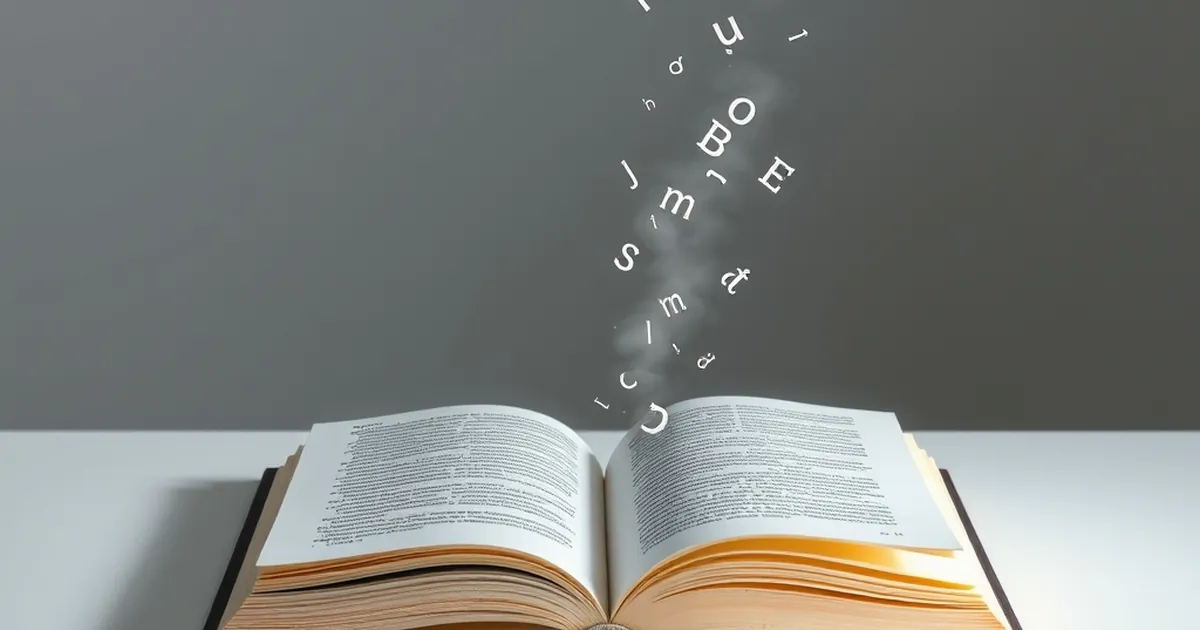
We have all experienced it. We finish a book, close the final page, and feel a surge of accomplishment, only to discover a week later that we can recall little more than a vague impression of the plot or a single, isolated concept. This phenomenon is not a failure of will or intelligence; it is a predictable outcome of how our cognitive architecture processes, stores, and retrieves information. The real question is not why we are so forgetful, but rather what systematic changes we can make to our reading practices to transform ephemeral impressions into durable knowledge.
The Neurological Reality of Reading
The Forgetting Curve and Cognitive Load
The primary culprit behind our rapid forgetting is a well-documented psychological principle: the Ebbinghaus Forgetting Curve. Hermann Ebbinghaus’s 19th-century experiments demonstrated that we lose approximately 50% of newly learned information within the first hour, and up to 70% within 24 hours. This is not a flaw but a feature of a brain designed to prioritize survival-relevant data over the vast majority of sensory input.
When we read passively—moving our eyes across lines of text without active engagement—we are essentially asking our working memory to hold an enormous amount of novel content. This cognitive load quickly overwhelms the limited capacity of our attentional system. The brain, unable to see the immediate relevance of the information, tags it for deletion rather than for long-term storage.
The Illusion of Understanding
There is a deceptive gap between the feeling of comprehension during reading and the actual encoding of that information into memory. When we read a well-written paragraph, we feel as though we understand it. This feeling is often mistaken for learning. In reality, the brain is simply processing the surface structure of the sentences—the syntax and the immediate semantic meaning—without creating the robust neural connections necessary for later recall.
This is why we can finish a chapter and feel satisfied, yet struggle to summarize its core argument. The brain has processed the text for temporary comprehension but has not engaged the deeper encoding mechanisms required for retention.
Active Reading: Four Strategies for Retention
1. The Feynman Technique: Teach Before You Forget
One of the most effective antidotes to the forgetting curve is the Feynman Technique, named after the physicist Richard Feynman. The core principle is deceptively simple: after reading a section, close the book and explain the concept in plain, simple language, as if teaching it to someone who has no background in the subject.
If you stumble or find yourself using jargon, you have discovered a gap in your understanding. This gap is precisely where forgetting would have occurred. By forcing yourself to translate complex ideas into simple language, you are actively building a durable mental model. This process shifts the information from passive recognition to active reconstruction, a far more powerful memory strategy.
2. Marginalia and the Art of Annotation
Reading with a pen in hand is not merely a nostalgic habit; it is a cognitive intervention. The act of writing in the margins—questioning a premise, connecting an idea to a personal experience, or summarizing a paragraph in your own words—transforms you from a spectator into a participant.
This practice, known as marginalia, forces the brain to evaluate the text rather than just consume it. When you write a question like, "Does this apply to the case of X?" you are creating a unique retrieval cue. Later, when you see that note, your brain will reactivate the entire context of the passage, including your own critical thinking about it.
3. Spaced Repetition: Working Against the Curve
The forgetting curve is predictable, which means it is also manipulable. Spaced repetition is a scheduling technique that leverages our neural biology to interrupt the process of forgetting. Instead of reviewing material once, you review it at expanding intervals: after one day, then three days, then a week, then a month.
Each time you successfully retrieve the information just before it would have been forgotten, you strengthen the neural pathway. This is not about cramming; it is about timing. Digital tools like Anki or physical index cards can be used to create a system where you are actively testing your recall of key concepts from each book you read.
4. The Two-Page Summary Rule
Consider the following concrete example from a graduate student I once supervised. He was reading dense theoretical texts for his dissertation but could not recall the arguments a week later. I asked him to write a summary of each chapter on exactly one side of a single sheet of paper—no more. He resisted, insisting that the material was too complex.
After three months, he reported a dramatic shift. The constraint forced him to identify the single most important argument, the key supporting evidence, and the main limitation. He was no longer trying to memorize the book; he was building a structure. The act of condensing forced his brain to prioritize and organize, which are the foundational processes of long-term memory consolidation.
Rethinking the Quantity of Reading
The Myth of the "Finished" Book
We have been culturally conditioned to believe that finishing a book is a virtue in itself. This is a destructive myth. The goal of reading is not to accumulate a high number of finished titles on a list; it is to change the way you think. A single chapter of a dense, profound book, fully understood and integrated, is worth more than a dozen books skimmed and forgotten.
Adopting a mindset of "slow reading" is a direct countermeasure to the forgetting problem. It allows you to stop after a few pages, reflect, and apply one of the active strategies above. This approach respects the brain’s capacity for deep processing rather than fighting against it.
The Practical Takeaway
The problem of forgetting is not a personal deficiency; it is a mismatch between the passive consumption of text and the active nature of memory. The solution does not lie in reading more books or reading faster. It lies in reading with the specific intention of building a structure of knowledge.
Starting tomorrow, choose one book you are currently reading. For the next week, apply the Feynman Technique to just one section per day. After seven days, ask yourself whether you remember more of that book than the last one you finished. The answer will likely be a confirmation that the act of teaching, even to an imaginary audience, is the most powerful tool we have against the relentless tide of forgetting.