The Marginal Utility of a Deliberately Defaced Page
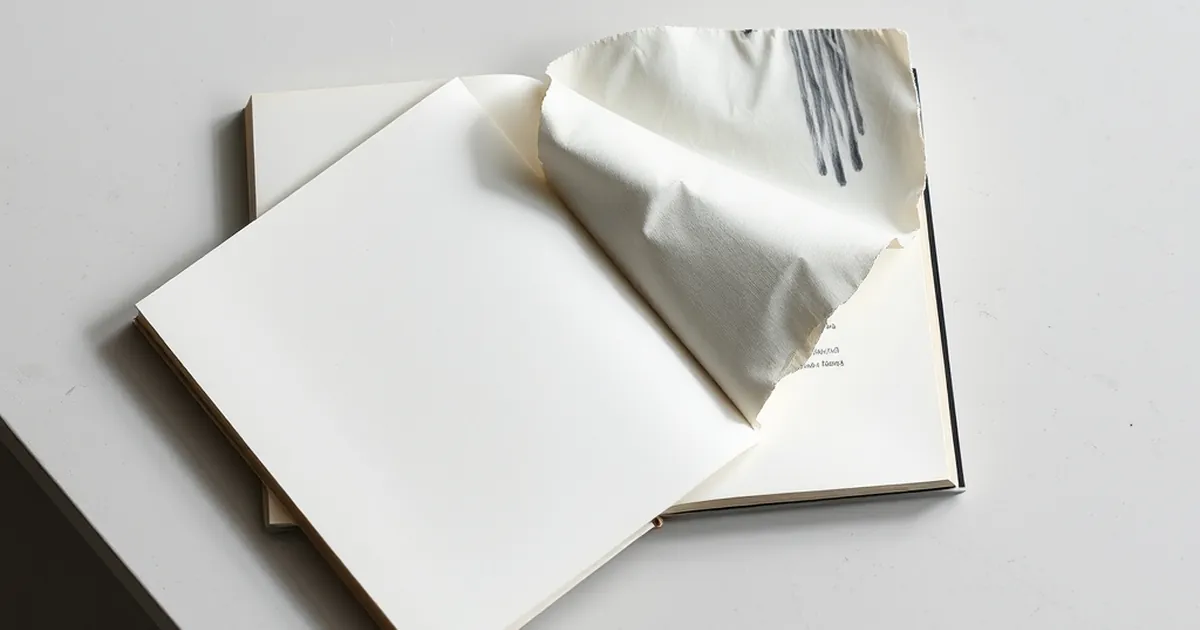
The question of what a book is for reaches a peculiar crisis point in the act of deliberate defacement. When we tear a page, scrawl in the margin, or strike through a printed sentence with a heavy black line, we are not merely damaging an object; we are renegotiating its value. The title of this piece asks us to consider the marginal utility of such an act—what is the additional benefit, or loss, that a reader gains when they commit an act of vandalism against the very medium that is meant to inform them? This is not a question of preservation or ethics alone, but a deep inquiry into the economics of attention and the materiality of knowledge.
The premise hinges on a paradox. In standard economic theory, marginal utility refers to the additional satisfaction gained from consuming one more unit of a good. For a book, that "good" is typically the text—the immaterial sequence of words that conveys meaning. Defacing the page, however, attacks the physical substrate, the carrier of that meaning. To understand the utility of this destruction, we must first separate the informational value of the text from the functional value of the page as a surface, and then examine how the deliberate act of marking alters the reader's relationship to both.
The Page as a Site of Contested Value
The pristine page holds a specific cultural value. It represents potential, authority, and the unblemished transmission of the author's intent. Bibliophiles and librarians treat the clean page as a sacred object, where any mark is a contamination, a reduction in monetary and archival worth. In this framework, the marginal utility of a defaced page is strictly negative; the act destroys value.
Yet, this perspective ignores a crucial dimension of the reading experience. The page is not merely a passive container; it is an interface. A clean page offers a frictionless surface, but it also offers a blank space that invites interaction. The value of a page is not static; it shifts depending on the reader's purpose. For a student cramming for an exam, the marginal utility of a highlighter stroke is immense—it isolates the key datum from the noise. For a collector, the same stroke is a catastrophe. The utility, therefore, is not inherent in the object but is derived from the function the reader assigns to it.
This is where the "marginal" aspect becomes acute. The first note in a margin is a tentative step. The tenth note builds a scaffold of personal understanding. But there is a tipping point. When the density of marks exceeds the density of the printed text, the page ceases to be a book and becomes a notebook. The marginal utility of that final, defacing scribble—the one that obscures the original text—is the point at which the reader has fully replaced the author's authority with their own. It is the moment of intellectual ownership.
The Economics of Cognitive Offloading
One of the primary arguments for the utility of defacement lies in the concept of cognitive offloading. The human working memory is limited; we cannot hold complex arguments in our heads without external support. Writing in a book is a form of external memory, a physical extension of the mind. When you underline a passage, you are not just marking ink; you are creating a spatial anchor for a complex thought.
The deliberate act of defacement—specifically, the aggressive crossing-out of a passage—serves a unique cognitive function. It is an act of disagreement made manifest. When you strike through a paragraph, you are not merely ignoring it; you are performing a critical dismissal. This physical gesture has a higher utility than simply thinking "this is wrong," because it externalizes the judgment. The defaced page becomes a record of your intellectual journey, showing not just where you agreed, but the exact location where you refused to follow the argument. This is the marginal utility of negation.
The Case of the Annotated Argument
Consider a concrete example from my own practice. I own a copy of a dense treatise on economic theory—say, a first edition of John Maynard Keynes's The General Theory. The pages are brittle, and the margins are narrow. On page 78, there is a paragraph on liquidity preference that has historically been interpreted in conflicting ways. In my copy, a previous owner—a scholar, judging by the handwriting—has not merely underlined the paragraph.
They have drawn a vertical line down the margin, added a question mark, and then, in a fit of apparent frustration, have drawn two heavy diagonal lines across the entire paragraph. The text is still legible, but it is clearly marked as "rejected" or "disputed." The marginal utility of this defacement is not in the destruction of the text, but in the creation of a critical artifact. I, as a later reader, gain a piece of information that is not in the text itself: the emotional and intellectual response of a prior reader. The utility of the defacement is in its ability to transmit a meta-cognitive signal across time.
The Aesthetics of Ruin and the Anti-Text
There is also a purely aesthetic dimension to the defaced page that challenges our assumptions about utility. In the Western tradition, we often associate beauty with completeness and symmetry. However, there is a powerful aesthetic of the ruin—the broken column, the faded fresco—that suggests beauty can be found in destruction. A deliberately defaced page can possess a similar quality. The stark black line against the serif type creates a visual tension that is intellectually stimulating. It disrupts the monotony of the text block, forcing the eye to confront the materiality of the book itself.
This leads to the concept of the "anti-text." When a page is defaced to the point of illegibility, it stops being a text and becomes an object. The utility of this transformation is paradoxical: it frees the reader from the tyranny of meaning. In a world saturated with information, the ability to create a space of non-information—a page that says "I refuse to engage with this"—has a high utility for mental health and focus. The defaced page becomes a statement of intent, a boundary drawn against the endless flow of words.
The Tipping Point of Illegibility
However, we must be careful to distinguish between strategic defacement and destructive rage. The marginal utility curve for defacement is not linear; it is an inverted U. There is a point where additional marks yield diminishing returns. If you cover a page with so many notes that you can no longer read the original text, you have destroyed the very information you were trying to process. The utility drops to zero, or even negative, because you now have to find another copy to consult.
The skilled annotator knows where this tipping point lies. They understand that the goal is not to obliterate the text, but to create a palimpsest—a layered document where the original text and the reader's commentary exist in a productive tension. The marginal utility of the defacement is maximized when the original text remains visible under the marks, allowing for a constant comparison between the author's words and the reader's critique. The moment the marks obscure the text, the utility is lost.
The Practical Takeaway: The Dialectic of the Mark
So, what is the practical takeaway for the modern reader, who lives in a world of e-readers and digital highlights? The philosophy of the defaced page offers a powerful counter-argument to the sanitized world of digital reading. E-readers offer a clean interface, but they lack the material resistance that makes defacement meaningful. A digital highlight is a virtual act; it is easily deleted and leaves no physical trace. The act of defacing a physical page is a commitment. It is a form of embodied cognition that requires a deliberate motor action—the pressure of the pen, the tear of the paper.
The forward-looking note is this: do not be afraid to destroy your books. The marginal utility of a deliberately defaced page is not in the preservation of knowledge, but in the production of understanding. The next time you read a dense argument, do not just nod along. Pick up a pen. Strike through a sentence you find flawed. Write "No!" in the margin. Draw a line connecting two disparate ideas. You are not ruining the book; you are writing a new one, in dialogue with the original. The value of the text is not in its pristine state, but in its capacity to generate a response. The defaced page is the highest testament to a book's utility: it proves that the book was not just read, but used.